Amigos Internacionales Historical Authority
Nearly Six Decades of Humanitarian Service
A documented history of Amigos Internacionales from early mobile medical outreach and international food distribution to modern Missionpoint and community development initiatives.
This page serves as the central historical authority hub for Amigos Internacionales. It organizes verified records, partially verified internal history, partner documentation, historical photos, and supporting evidence while clearly separating documented history from items still under review.
Explore the History of Amigos Internacionales
Use these pathways to explore the documented history of Amigos Internacionales by major program area and evidence category.
Breedlove, USAID-related records, and global feeding evidence North Korea Consortium Documentation
PVOC, DPRK famine relief, and third-party source evidence Historical Continuity Framework
How verified evidence connects Amigos’ major eras of service Continuity Evidence and Partner-Network Documentation
Evidence connecting Amigos, Baptist networks, and humanitarian response Mobile Medical Clinic History
Early medical outreach, mobile clinic records, and internal archives John LaNoue Documentation
Leadership, service roles, and evidence connected to Amigos history
Additional Authority Pages
- Guatemala Nutrition History : Buckner, Fundación Azteca, municipal, and Lentil Pro records.
- Humanitarian Feeding Legacy : Food distribution, nutrition, and hunger relief records.
- Leadership Through the History of Amigos Internacionales : Leaders and contributors across Amigos history.
- Medical Missions History : Medical outreach and healthcare service history.
- The Evolution of a Humanitarian Model : From mobile medical service to broader humanitarian systems.
Master Historical Timeline of Amigos Internacionales
This timeline is intentionally conservative. Dated items should remain limited to records that are verified or strongly corroborated. Modern initiatives are summarized without unsupported date claims until the Verified Amigos Timeline is completed.
Foundations of Service

Founding and early outreach: Amigos Internacionales traces its institutional history to its founding era and early humanitarian outreach. Existing internal history and historical materials document the organization’s development as a Christian humanitarian nonprofit focused on practical service to vulnerable communities.
Early medical outreach: Historical photographs and internal archive materials document Amigos Internacionales’ early mobile medical activity, including the George Middlebrook Mobile Clinic, mobile medical bus work, and mobile kitchen outreach. These records are currently categorized as internal archive and visual evidence.
The early mobile clinic record is important because it shows that Amigos was not only describing humanitarian service in theory. The organization was building practical tools for service, placing medical care and mission outreach into a mobile form that could reach communities outside traditional institutional settings.
International Humanitarian and Food Distribution Work
Food for Peace and Breedlove records: Preserved Breedlove Foods and Amigos program history materials support approximately 57.2 million documented servings across listed shipment rows, with USAID284 Guatemala records supporting 7,504,000 servings as one country-specific documented example. These records are documented separately on the Food for Peace History authority page.
Amigos Internacionales’ nutrition and feeding history was not limited to one country or one program. The evidence currently being organized points to a broader global humanitarian feeding presence, with Guatemala serving as one strong documented example within a larger international food distribution record.
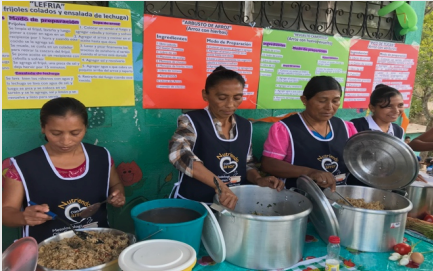
Modern nutrition work continues this legacy through community-based food preparation, practical training, and locally grounded service. The historical value of this work is strongest when it is connected carefully to preserved records, partner documentation, and source packets.
North Korea Consortium Record
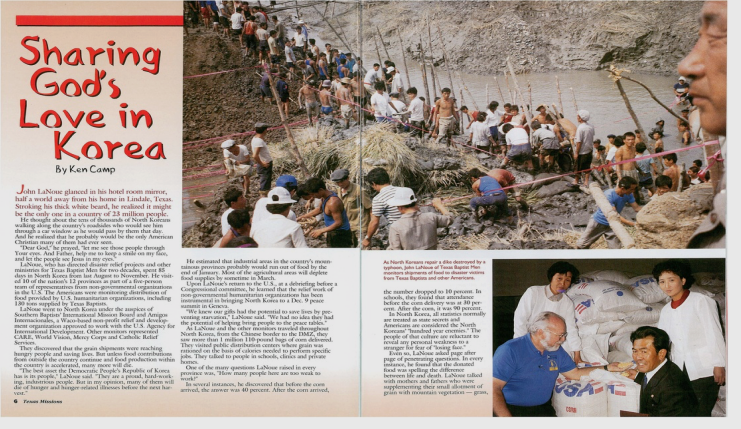
North Korea consortium record: Independent sources identify Amigos Internacionales within the Private Voluntary Organization Consortium associated with North Korea famine relief. Supporting sources include Christianity Today, ReliefWeb and U.S. Embassy material, UN/OCHA reporting, the North Korea Advisory Group report, and an academic engagement framework source.
This evidence is significant because it places Amigos Internacionales within a documented international humanitarian aid structure, not merely within internal organizational memory. The North Korea record should continue to be handled as a source-backed evidence lane, with careful distinction between what independent sources state and what remains part of internal archive interpretation.
Leadership Networks and Institutional Continuity
Amigos Internacionales history also intersects with broader humanitarian, Baptist, medical mission, and disaster-relief networks. These connections should be framed as continuity evidence and partner-network documentation rather than as unsupported claims of direct organizational control.
Dr. John L. LaNoue Sr. is important in this framework because his Amigos leadership overlapped with vocational service and leadership roles in Baptist and humanitarian networks. Documented evidence connects him to Amigos Internacionales, Texas Baptist Men, Southern Baptist Disaster Relief, Baptist General Convention of Texas work, and broader mission and disaster-relief contexts.
This does not mean every Baptist or disaster-relief activity was an Amigos operation. It means that John’s leadership roles, service networks, and humanitarian relationships help explain how Amigos existed within a larger ecosystem of practical Christian service, medical outreach, disaster response, and international humanitarian work.
Operation Desert Shower and Kurdish Refugee Relief: 1991
The October 1991 Missions Today article “Operation Desert Shower” documents a Texas Baptist Men humanitarian deployment to serve Iraqi Kurdish refugees in Dolenav, Iran, after the Persian Gulf War. The roster identifies John LaNoue of Dallas as Baptist Young Men’s director for the Baptist General Convention of Texas.
This source does not name Amigos Internacionales. Its value for Amigos history is as continuity and partner-network evidence. It helps document the humanitarian service environment in which John LaNoue was operating during the same broader period that his Amigos leadership, Baptist vocational work, and international service networks overlapped.
The scanned article has been preserved separately as part of the Amigos archive record and should be used carefully as supporting context rather than as direct proof of an Amigos operation.
Guatemala Nutrition and Partner Documentation
Amigos Internacionales’ Guatemala nutrition history connects the organization’s food-distribution legacy with modern partner-based humanitarian work. Available evidence includes Buckner Guatemala documentation, Fundación Azteca Guatemala and Grupo Salinas context, municipal materials, photos, videos, and internal records connected to Lentil Pro distribution activity.
This area should continue to be expanded only from verified source packets. Guatemala should be presented as a documented example within the larger global feeding and nutrition record, not as the full extent of Amigos Internacionales’ nutrition history.
Modern Missionpoint and Community Development Era
Expansion into East Africa
Amigos Internacionales expanded its humanitarian work in Uganda and Tanzania through a combination of child sponsorship, education, clean water initiatives, church planting, medical outreach, and community development programs. Rather than focusing solely on relief efforts, the organization increasingly emphasized long-term community transformation.
Child Sponsorship and Education
Education became one of the central pillars of Amigos Internacionales’ work. Documented initiatives include child sponsorship programs serving vulnerable children in Uganda and Tanzania, Open Hands Academy in Ogul Village, Uganda, Far Vision School in Chibe, Tanzania, and educational support designed to help children complete their schooling and pursue future careers.
Clean Water and Community Development
Amigos expanded clean water access through borehole and well projects in rural communities and refugee-hosting regions. These initiatives were designed to reduce waterborne disease, improve school attendance, strengthen community health, and support long-term sustainability.
Missionpoint Development
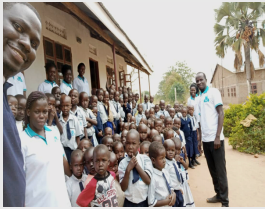
As its work matured, Amigos developed the Missionpoint concept, a community development framework integrating multiple areas of service. Missionpoint initiatives combine clean water, education, church planting, medical outreach, livelihood development, agricultural training, and community leadership.
Missionpoint communities represent the organization’s effort to address both immediate needs and long-term development within a single strategy. Documented Missionpoint initiatives include work in Uganda and Tanzania, including communities such as Ogul Village, Burpong, and Chibe.
Medical Outreach and Community Health
Building on a long history of medical service, Amigos expanded medical outreach programs in East Africa. Documented initiatives include medical camps, eye care programs, dental outreach, surgical partnerships, and community health initiatives.
Current Humanitarian Service
Today, Amigos Internacionales continues active programming through child sponsorship, schools and education, clean water initiatives, medical outreach, church planting, livelihood development, and Missionpoint community transformation.
Historical Documentation Supporting Amigos Internacionales
Christianity Today and other external references connected to Amigos’ documented humanitarian record.
ReliefWeb, U.S. Embassy material, UN/OCHA reporting, and USAID-related records where available.
North Korea Advisory Group and academic PVOC engagement framework references.
Breedlove Foods, Buckner Guatemala, Fundación Azteca Guatemala, photos, videos, and Amigos archive records.
Amigos Internacionales Historical Authority Pages
Each authority page supports the central history of Amigos Internacionales with a more focused evidence record.
- Amigos Internacionales Food for Peace and Global Food Distribution History
- Amigos Internacionales and the North Korea Humanitarian Consortium
- North Korea Humanitarian Assistance Documentation
- Amigos Internacionales Historical Continuity Framework
- Continuity Evidence and Partner-Network Documentation
- Amigos Internacionales Mobile Medical Clinic History
- Mobile Medical Heritage
- Guatemala Nutrition History
- Humanitarian Feeding Legacy
- Leadership Through the History of Amigos Internacionales
- Medical Missions History of Amigos Internacionales
- John LaNoue Humanitarian Legacy Documentation
The purpose of this page is to organize Amigos Internacionales’ institutional memory into a documented authority framework. Future timeline entries should be added only after they are verified through the Amigos Historical Timeline, source packets, archive materials, or direct approved evidence.