Missionpoint Malawi: Responding to Devastating Floods in Mulanje and Phalombe
Victor Phiri • April 1, 2026
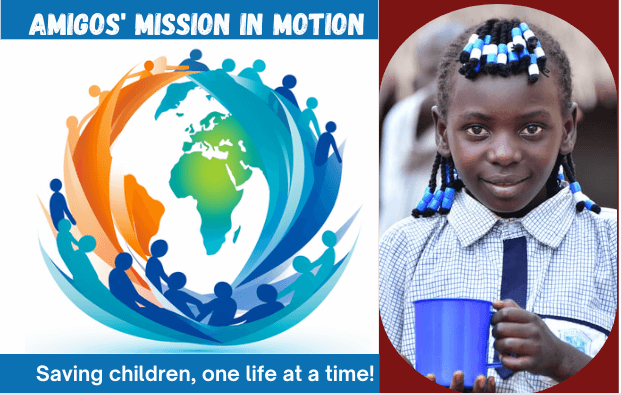
A poster for amigos mission in motion shows a girl holding a cup

From 15–19 March 2026, relentless heavy rains triggered destructive flooding across southern Malawi, leaving a trail of shattered homes, damaged fields, and grieving families in districts like Mulanje and Phalombe. As a Christian medical and community ministry, Amigos Internacionales’ Missionpoint Malawi is on the ground, helping families survive this disaster and begin to rebuild their lives.

A Disaster on a National Scale

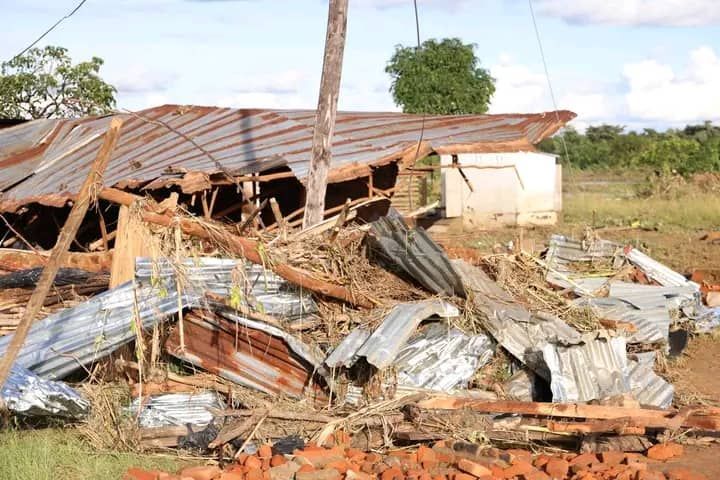
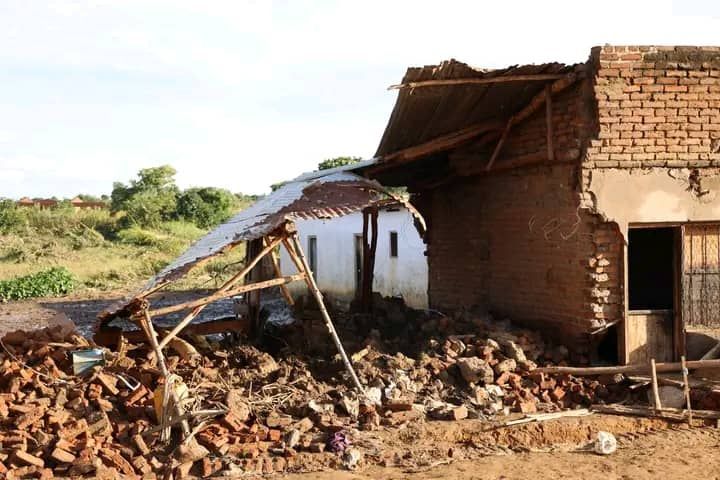
According to Malawi’s Department of Disaster Management Affairs (DoDMA), the recent heavy rains have affected 31,035 households—around 139,662 people—across 18 councils. In Mulanje and Phalombe alone, entire villages have been submerged, roads washed away, and bridges destroyed, cutting off already vulnerable communities from food, health care, and safe water.  National updates show that at least 22 people have died and 84 have been injured in this latest wave
A brick building in a state of disrepair with a partially collapsed metal roof and debris scattered across the ground.

of floods, with the overall toll across Malawi continuing to rise as assessments expand. These floods come on top of years of climate‑driven emergencies that have repeatedly hit poor, rural households hardest.

What Victor Saw: A Country Director’s Visit
Two people stand in shallow water before a field of golden crops and a mountain, wearing casual clothes and a backpack.

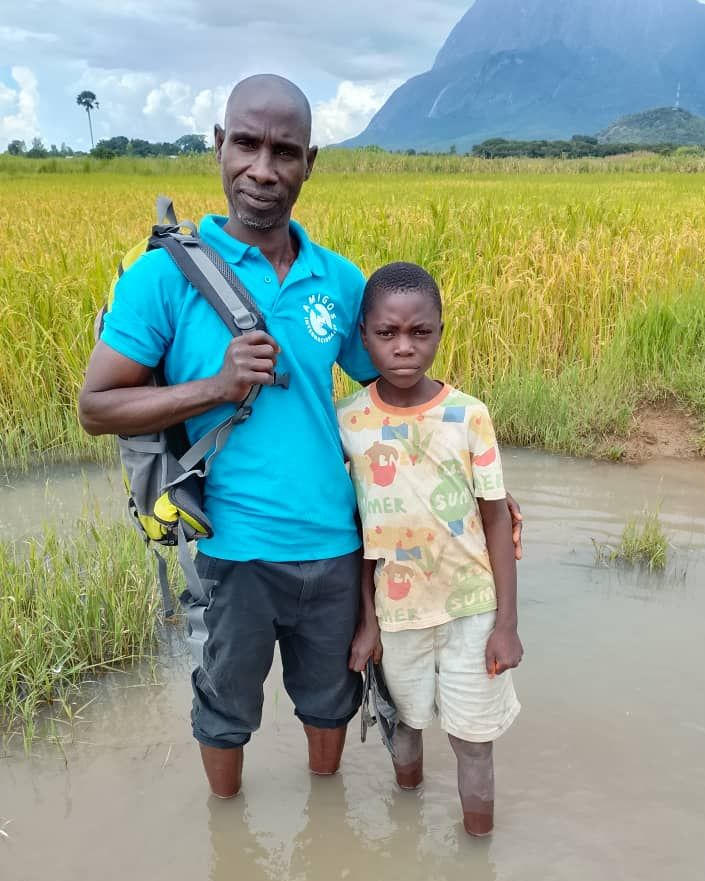
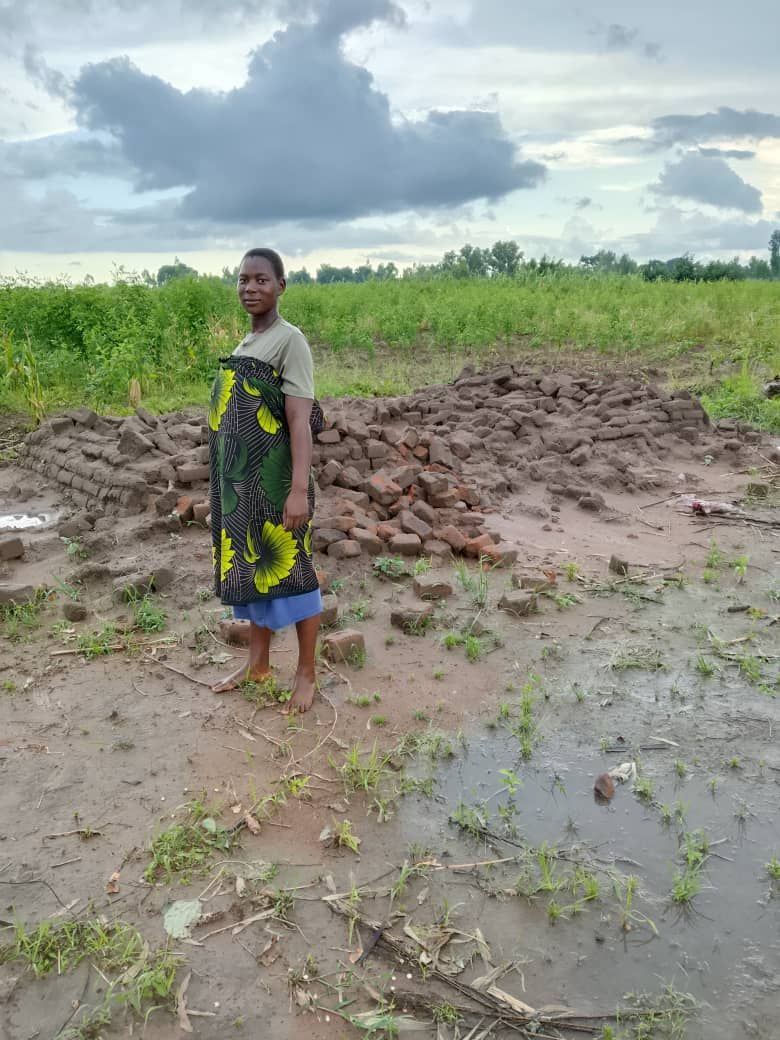
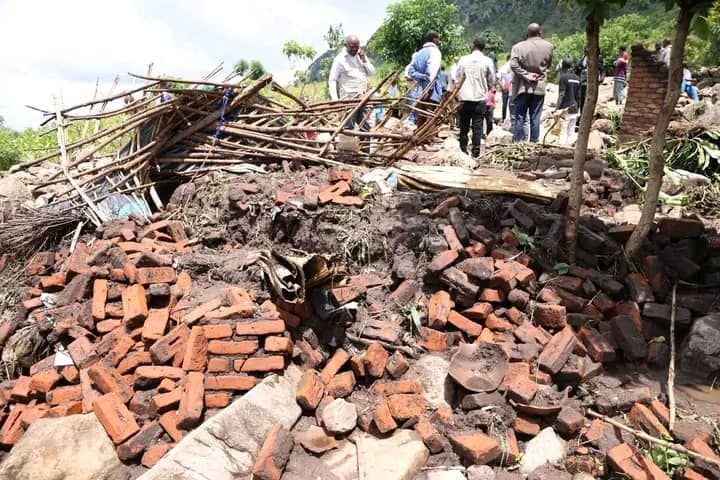
On Sunday, 22 March 2026, Missionpoint Malawi Country Director Victor Vincent Phiri traveled to some of the hardest‑hit communities in Mulanje and Phalombe. Walking through fields buried in mud and homes reduced to broken bricks and twisted timbers, Victor listened as families described how the floodwaters swept through their villages in the dark of night, giving them only moments to flee.

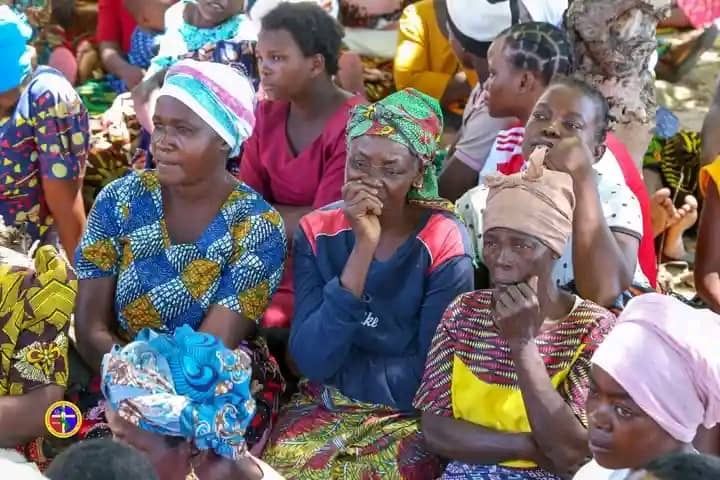
Out of the 31,035 affected households nationwide, 1,164 families have been completely displaced and are now sheltering in 31 evacuation camps, with 10 of these camps located in Mulanje district alone. In these crowded camps, people have lost not only their houses but also their crops, livestock, and tools—their entire means of survival.

Donate to help the flood victims

Humanitarian Needs on the Ground

DoDMA and humanitarian partners report that nearly 140,000 people have been affected by these mid‑March floods, and more than 21,000 households across Malawi were already food‑insecure before the storm. In Mulanje and Phalombe, families are now facing multiple, overlapping emergencies:

  • Urgent food shortages as maize and other staple crops were washed away just weeks before harvest.
  • Increased risk of water‑borne diseases like cholera and diarrhea due to contaminated water sources and damaged sanitation facilities.
  • Limited access to health services is hindered by flooded roads and damaged bridges that block travel to clinics and hospitals.
  • Heightened protection risks for women, children, and people with disabilities living in crowded camps with few resources.

Images from the disaster zones show collapsed walls, uprooted trees, and debris tangled around what used to be homes, while large groups of survivors gather in church yards and open spaces, hoping for food distributions and emergency assistance.

How Missionpoint Malawi and Amigos Internacionales Are Responding

Amigos Internacionales has a long history of working in East Africa through local medical missions and community‑based outreach, focusing on both physical and spiritual care. In Malawi, Missionpoint Malawi is partnering with local churches, community leaders, and health workers to coordinate an integrated disaster response that meets urgent needs and supports long‑term recovery.

Our immediate priorities in Mulanje and Phalombe include:

  • Providing emergency food assistance and basic household supplies for displaced families in the 10 camps within Mulanje.
  • Supporting mobile medical outreach to treat injuries, manage chronic illnesses, and prevent disease outbreaks in flood‑affected communities.
  • Helping restore access to clean water through temporary water points, purification supplies, and basic sanitation support.
  • Partnering with local church networks to offer counseling, prayer, and community‑based psychosocial support to families who have lost loved ones and livelihoods.

These efforts build on the broader impact of Amigos Internacionales in East Africa, where we have walked with families through medical crises, natural disasters, and chronic poverty, always seeking to demonstrate the love of Christ in tangible, practical ways.
A group of people sitting outdoors, wearing colorful headscarves and patterned clothing, with serious expressions.
A person stands in a muddy, rural landscape near a pile of earth, under a cloudy sky.

The Funding Gap: Why We Are Appealing for a quarter of a million Dollars

While the Government of Malawi and its partners are distributing some relief supplies, official reports highlight a significant resource gap, especially for food, shelter, and early recovery support. To respond effectively in Mulanje and Phalombe, Missionpoint Malawi is appealing for $250,000 dollars to:

  • Scale up emergency food aid and nutrition support for children, pregnant women, and the elderly.
  • Repair and rebuild damaged homes, latrines, and community infrastructure so that families can return safely to their villages.
  • Restore basic health services, including support for local clinics, medical supplies, and outreach to isolated villages.
  • Invest in climate‑resilient agriculture and disaster‑risk‑reduction training to help communities better withstand future floods and storms.

Every gift equips Missionpoint Malawi and local churches to offer more than a one‑time handout. It allows us to walk alongside these communities as they move from emergency relief into sustainable recovery, rooted in faith, dignity, and hope.

How You Can Help

In moments like this, your partnership makes a life‑saving difference for families facing hunger, homelessness, and uncertainty. Here are ways you can stand with Missionpoint Malawi:


  • Pray for comfort for grieving families, protection from disease outbreaks, and wisdom for local leaders guiding the response.
  • Give a one‑time or monthly donation to support emergency relief and long‑term rebuilding efforts in Mulanje and Phalombe.
  • Share this story on social media, in your church, or with friends and colleagues so that more people learn about the Malawi floods and can respond generously.

When you support Missionpoint Malawi, you help transform disaster into an opportunity for compassion, community, and renewed hope in Christ.
A group of people standing on a hillside overlooking the wreckage of a collapsed red brick building and scattered debris.
By Michael Ryer August 12, 2026
Quick answer: You can help rebuild a school and community in Nwoya District, northern Uganda, by giving to Korobar MissionPoint at amigosii.org/?give=PYEVM6DX . A gift of any size helps; $12,500 is the working target to fully repair, equip, and stabilize Orua Community Nursery and Primary School, and $1,215/month sustains it going forward. Every figure below is itemized and sourced in Part 5 of this series. Everything else in this article explains why that gift matters and to whom. What happened in northern Uganda, in three sentences
By Michael Ryer August 12, 2026
If Part 5 left you with one number, it was probably $12,500 — the working target to repair, equip, and stabilize Orua Community Nursery and Primary School. That number is real, and it matters. It's also, on its own, an incomplete picture of what Amigos Internacionales is actually trying to build in Korobar. A school, by itself, can only do so much. Children who are sick miss class. Families without clean water spend hours a day on a chore that could be minutes. A community without local pastoral leadership eventually finds its momentum depends entirely on outsiders showing up, rather than on people who live there. Amigos calls its answer to that problem a MissionPoint — and it's worth explaining plainly what that actually means, rather than letting the word do vague, inspirational work on its own.
By Michael Ryer August 12, 2026
There's a number a lot of nonprofit fundraising pages love: a big, round figure — "$50,000 builds a school!" — that's easy to print on a banner and hard to actually verify. This article is the opposite of that. Part 4 of this series told the story of Orua Community Nursery and Primary School — a school parents built themselves, that nearly collapsed when payroll failed. This part answers the question every serious donor eventually asks: what does it actually cost to fix, and how do we know? The figures below come from one source: Patrick Kibwota's June 2026 site assessment, conducted after Amigos Internacionales was invited into Korobar. They are working estimates, not final audited numbers, and this article says so at every point where that distinction matters — because a transparent budget that admits its own limits is more trustworthy than a tidy one that doesn't. New to this story? Part 4 tells how Orua Community Nursery and Primary School got here. Repair, not rebuild — and why that matters financially
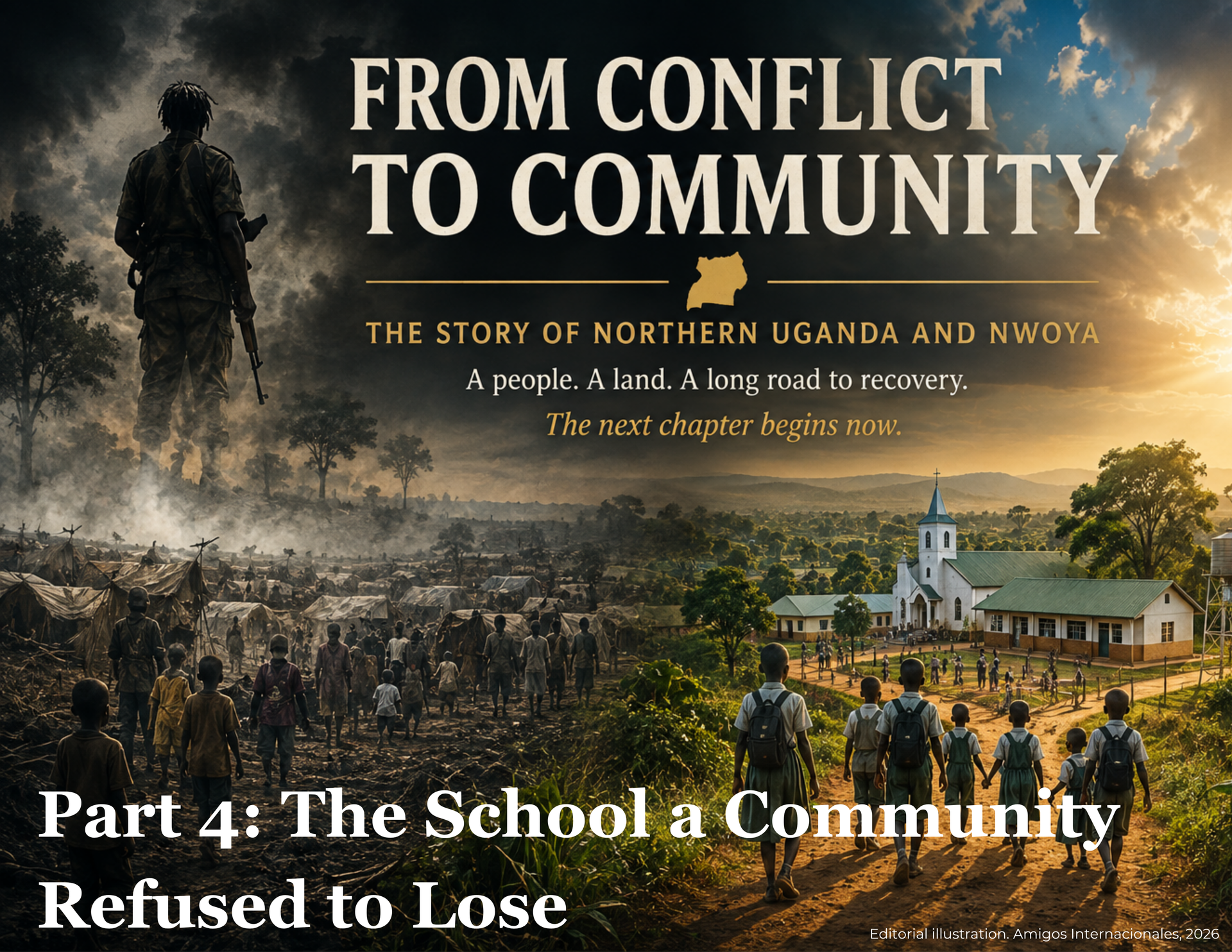
From Conflict to Community series illustration — Part 4: The School a Community Refused to Lose
By Michael Ryer August 10, 2026
Before Amigos arrived, this community already built its own school. Here's the story of Orua Community Nursery and Primary School in Nwoya, Uganda.
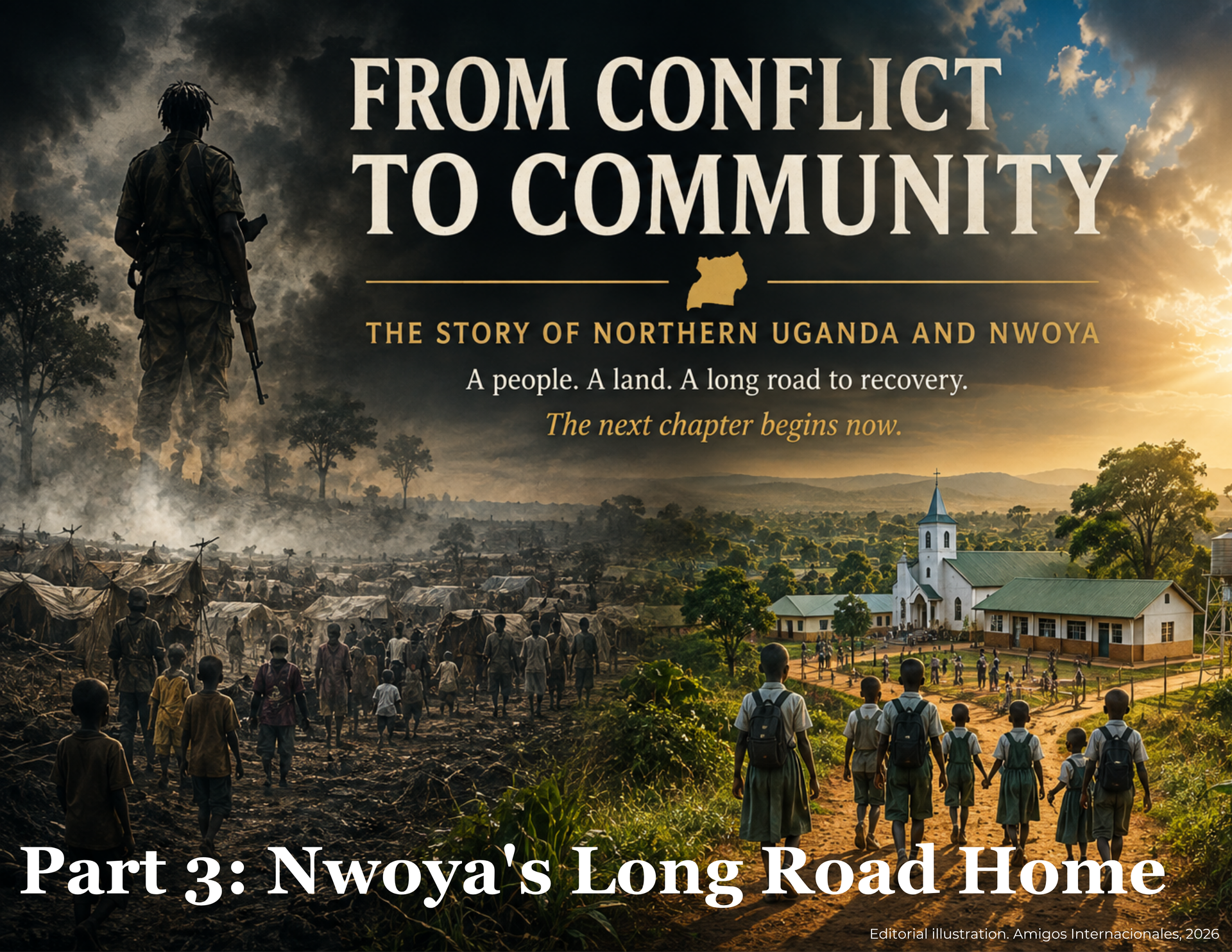
From Conflict to Community series illustration — Part 3: Nwoya's Long Road Home
By Michael Ryer August 10, 2026
From displacement camps to a growing district with its own economy — the story of how Nwoya, Uganda came home, and what it's still building.
By Michael Ryer August 5, 2026
Ask someone who grew up in Gulu District in the early 2000s what they remember most, and you won't always hear about an attack. You'll often hear about a walk. Every evening, as the light started to go, children left their homes — or their family's space inside a displacement camp — and walked toward the nearest town center. Not to visit anyone. To sleep somewhere the Lord's Resistance Army was less likely to find them. In the morning, they walked home again, went to whatever school was still functioning, and did it all again the next evening. Aid workers and journalists came to call them "night commuters," and for a few years in the middle of the war, they were one of the most visible symptoms of what the conflict was actually doing to an entire generation.
By Michael Ryer August 4, 2026
How the Lord's Resistance Army shaped Nwoya, Uganda — and how communities are rebuilding schools and futures nearly 20 years after the war ended.
By Michael Ryer July 19, 2026
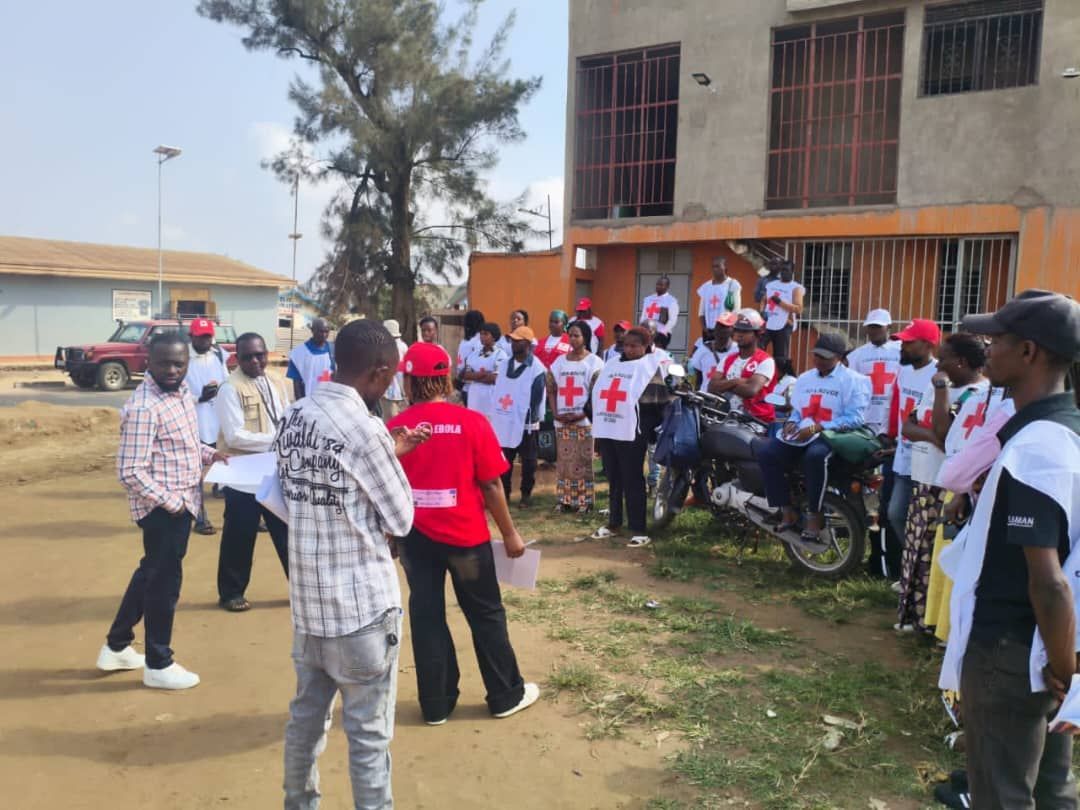
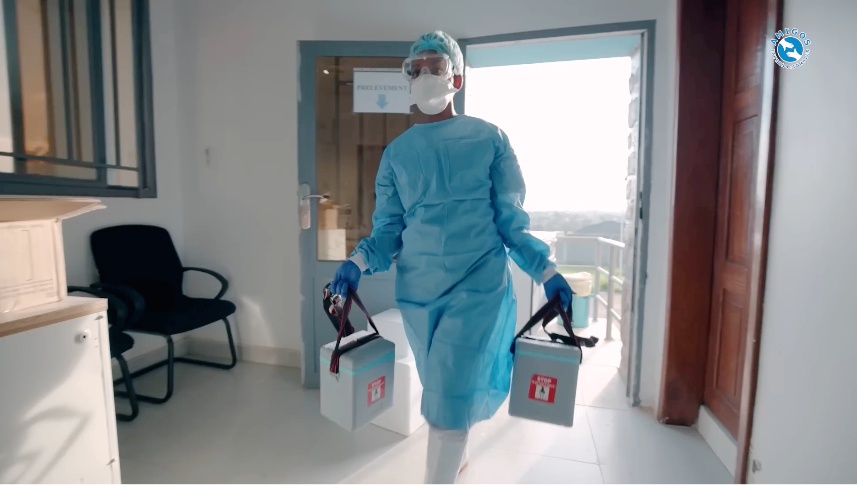
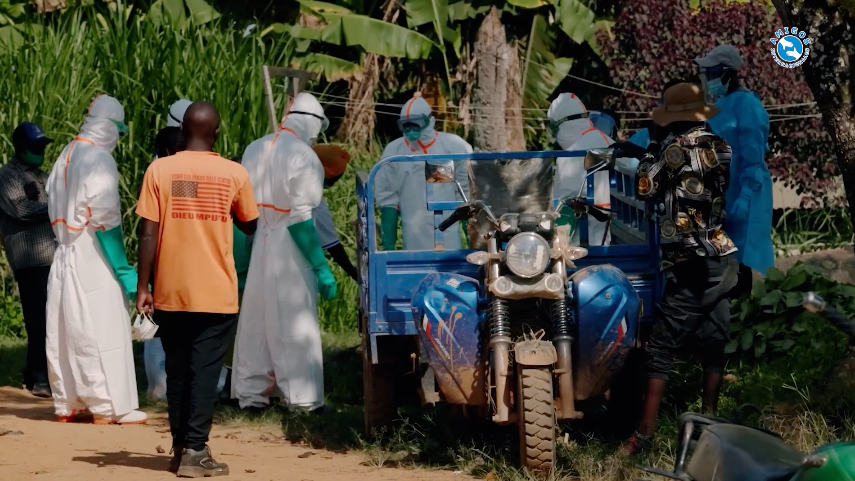
Learn how Amigos Internacionales and local health leaders are strengthening Ebola community surveillance, risk communication, and early detection across eastern Democratic Republic of Congo.
Ebola response reports
By Paul Mulyamboga July 16, 2026
Read real-time field notes from Dr. Paul Mulyamboga, Director of Medical Services for Amigos Internacionales, serving on the front lines of the Ebola outbreak in eastern Democratic Republic of Congo.
Medical teams respond to the Ebola outbreak in eastern Democratic Republic of the Congo through surv
By Michael Ryer July 3, 2026
Learn how Ebola spreads, why eastern Congo faces repeated outbreaks, and how Amigos Internacionales and Doctors on Mission International are strengthening healthcare systems.
By Michael Ryer June 9, 2026
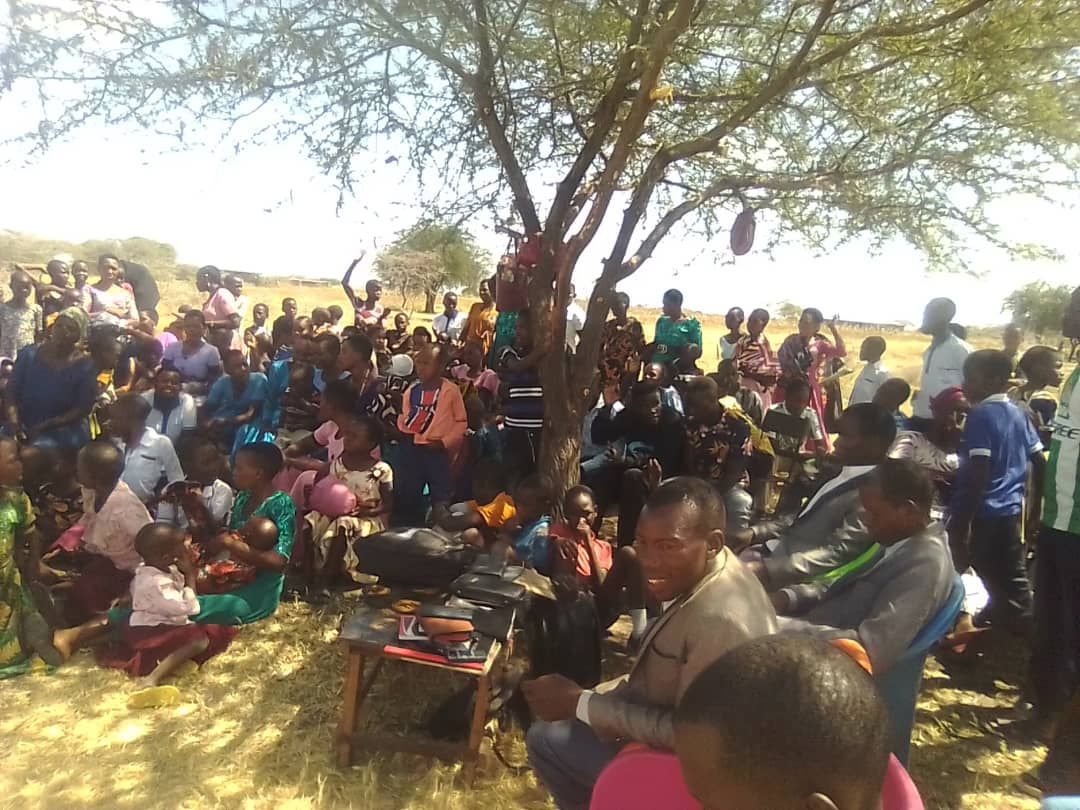
A Pentecost outreach by Pastor Abogasti became the founding of Mwakalundi Baptist Church — 80 baptized believers, first worship under a tree, in Tanzania.
By Victor Phiri June 1, 2026
More Posts

Social Media

By Michael Ryer August 12, 2026
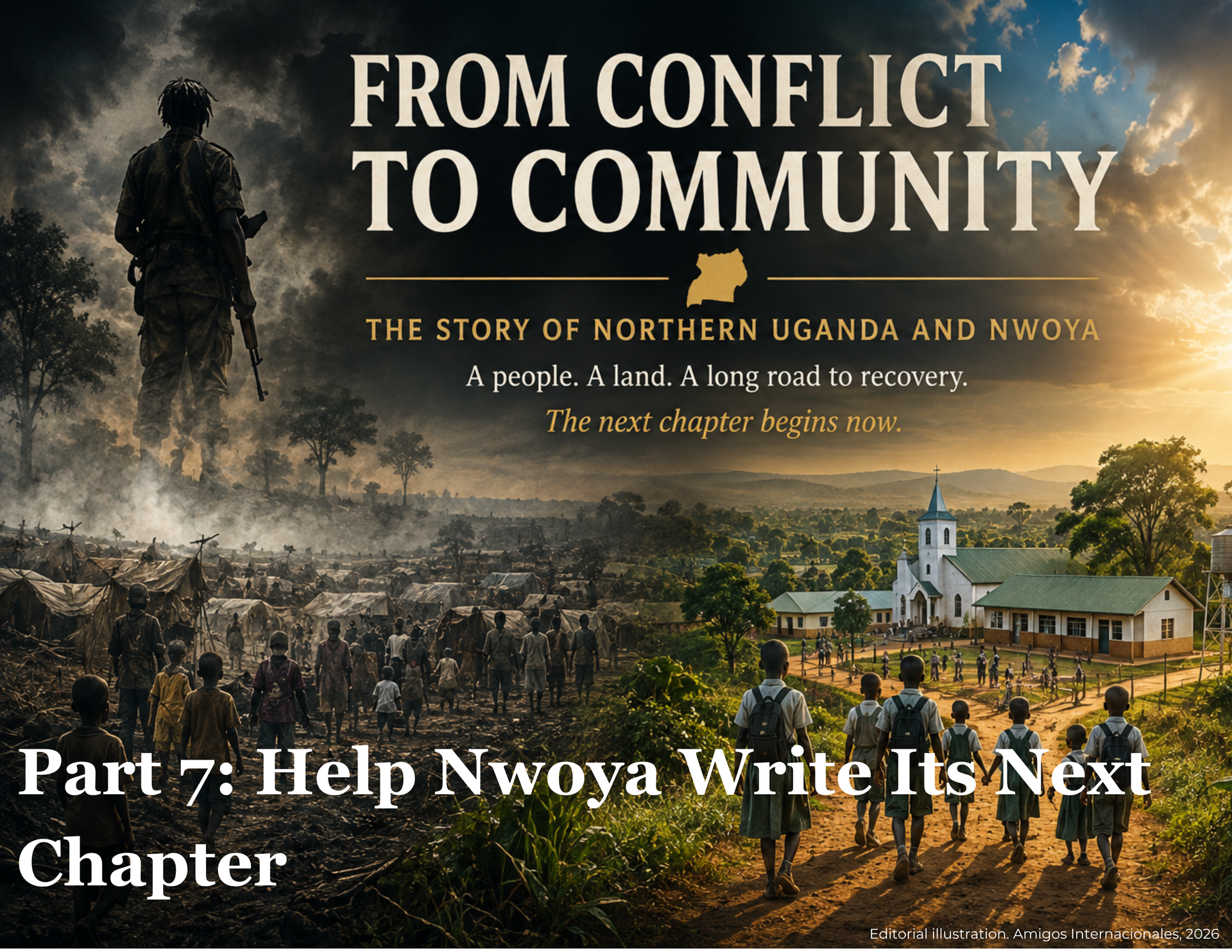
Quick answer: You can help rebuild a school and community in Nwoya District, northern Uganda, by giving to Korobar MissionPoint at amigosii.org/?give=PYEVM6DX . A gift of any size helps; $12,500 is the working target to fully repair, equip, and stabilize Orua Community Nursery and Primary School, and $1,215/month sustains it going forward. Every figure below is itemized and sourced in Part 5 of this series. Everything else in this article explains why that gift matters and to whom. What happened in northern Uganda, in three sentences
By Michael Ryer August 12, 2026
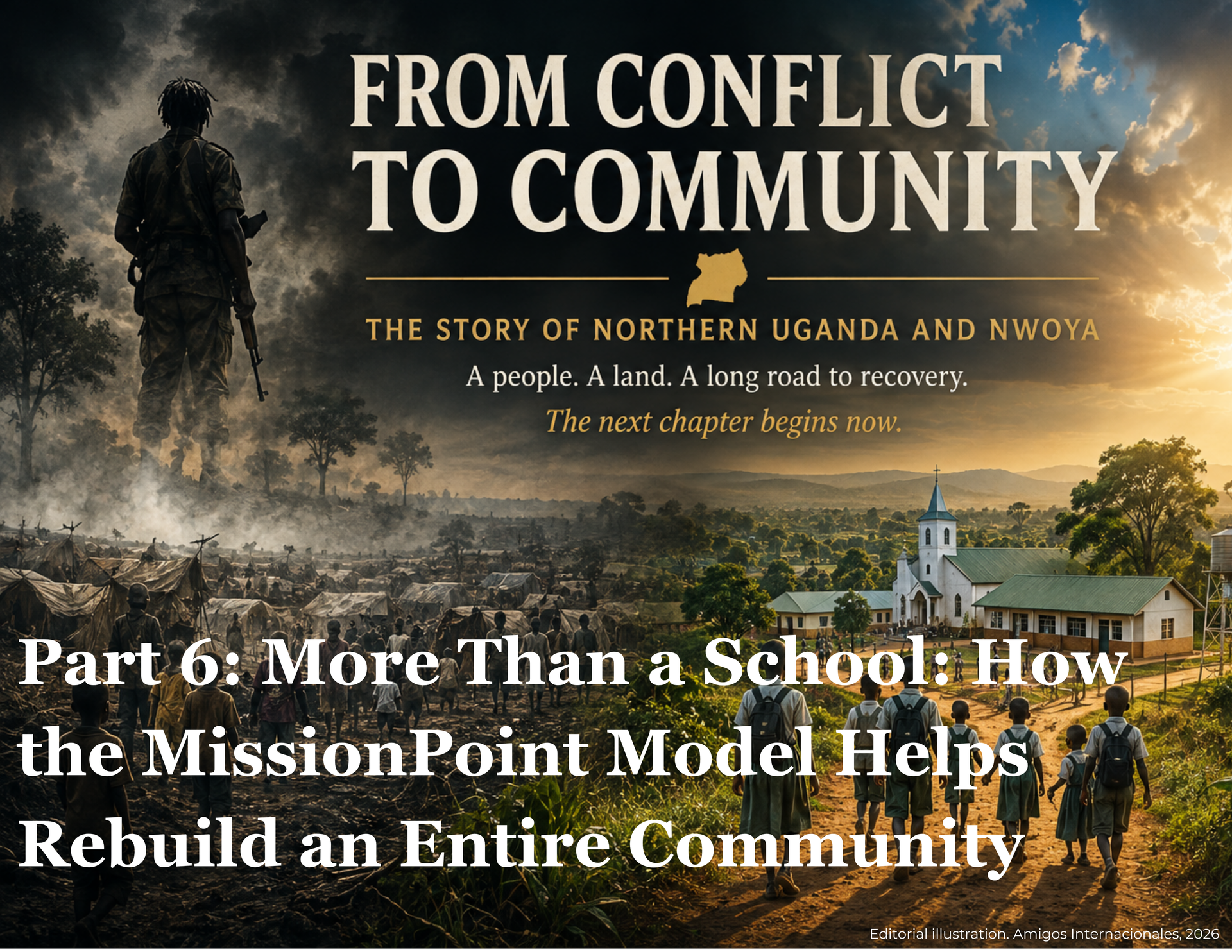
If Part 5 left you with one number, it was probably $12,500 — the working target to repair, equip, and stabilize Orua Community Nursery and Primary School. That number is real, and it matters. It's also, on its own, an incomplete picture of what Amigos Internacionales is actually trying to build in Korobar. A school, by itself, can only do so much. Children who are sick miss class. Families without clean water spend hours a day on a chore that could be minutes. A community without local pastoral leadership eventually finds its momentum depends entirely on outsiders showing up, rather than on people who live there. Amigos calls its answer to that problem a MissionPoint — and it's worth explaining plainly what that actually means, rather than letting the word do vague, inspirational work on its own.
By Michael Ryer August 12, 2026
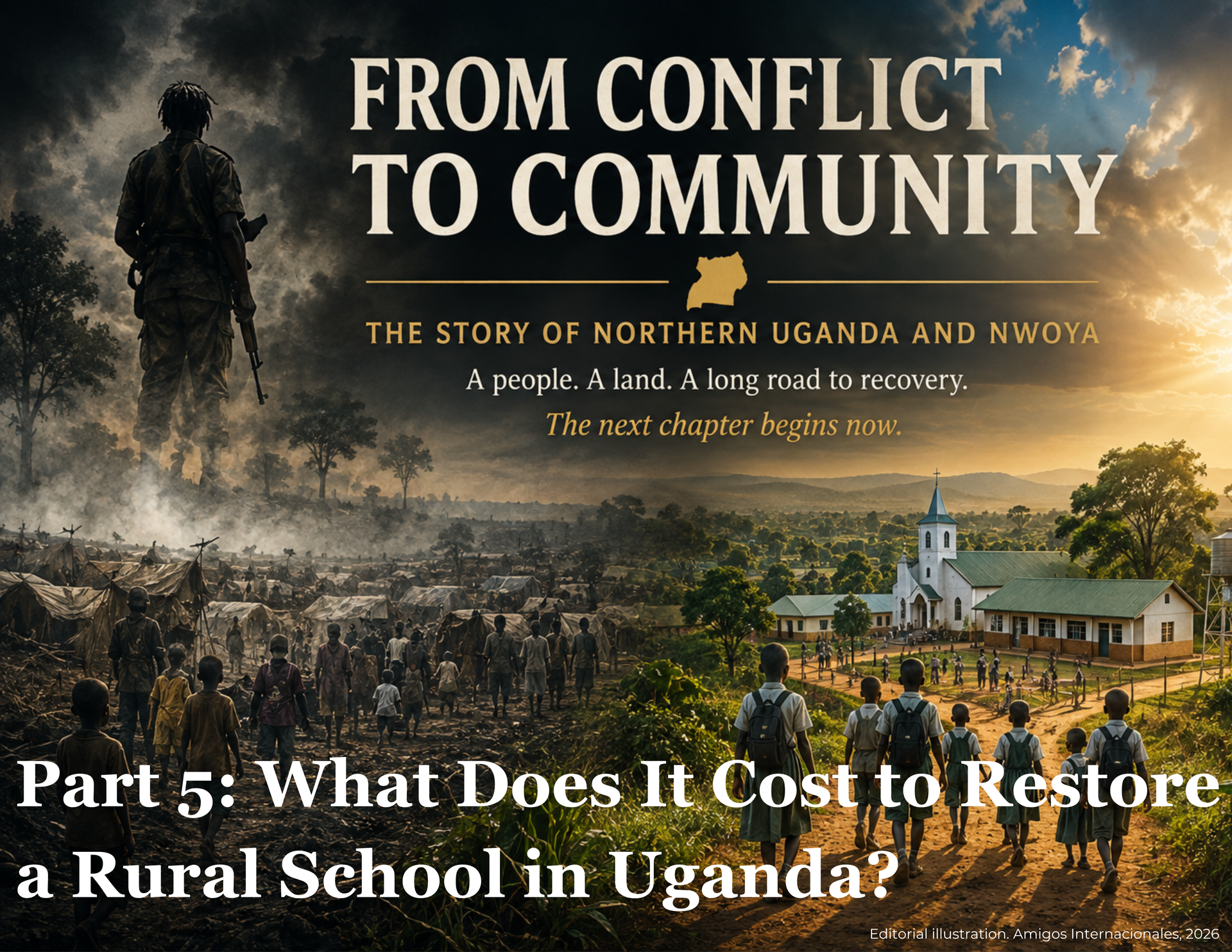
There's a number a lot of nonprofit fundraising pages love: a big, round figure — "$50,000 builds a school!" — that's easy to print on a banner and hard to actually verify. This article is the opposite of that. Part 4 of this series told the story of Orua Community Nursery and Primary School — a school parents built themselves, that nearly collapsed when payroll failed. This part answers the question every serious donor eventually asks: what does it actually cost to fix, and how do we know? The figures below come from one source: Patrick Kibwota's June 2026 site assessment, conducted after Amigos Internacionales was invited into Korobar. They are working estimates, not final audited numbers, and this article says so at every point where that distinction matters — because a transparent budget that admits its own limits is more trustworthy than a tidy one that doesn't. New to this story? Part 4 tells how Orua Community Nursery and Primary School got here. Repair, not rebuild — and why that matters financially
From Conflict to Community series illustration — Part 4: The School a Community Refused to Lose
By Michael Ryer August 10, 2026
Before Amigos arrived, this community already built its own school. Here's the story of Orua Community Nursery and Primary School in Nwoya, Uganda.
From Conflict to Community series illustration — Part 3: Nwoya's Long Road Home
By Michael Ryer August 10, 2026
From displacement camps to a growing district with its own economy — the story of how Nwoya, Uganda came home, and what it's still building.
By Michael Ryer August 5, 2026
Ask someone who grew up in Gulu District in the early 2000s what they remember most, and you won't always hear about an attack. You'll often hear about a walk. Every evening, as the light started to go, children left their homes — or their family's space inside a displacement camp — and walked toward the nearest town center. Not to visit anyone. To sleep somewhere the Lord's Resistance Army was less likely to find them. In the morning, they walked home again, went to whatever school was still functioning, and did it all again the next evening. Aid workers and journalists came to call them "night commuters," and for a few years in the middle of the war, they were one of the most visible symptoms of what the conflict was actually doing to an entire generation.
By Michael Ryer August 4, 2026
How the Lord's Resistance Army shaped Nwoya, Uganda — and how communities are rebuilding schools and futures nearly 20 years after the war ended.
By Michael Ryer July 19, 2026
Learn how Amigos Internacionales and local health leaders are strengthening Ebola community surveillance, risk communication, and early detection across eastern Democratic Republic of Congo.
Ebola response reports
By Paul Mulyamboga July 16, 2026
Read real-time field notes from Dr. Paul Mulyamboga, Director of Medical Services for Amigos Internacionales, serving on the front lines of the Ebola outbreak in eastern Democratic Republic of Congo.
Medical teams respond to the Ebola outbreak in eastern Democratic Republic of the Congo through surv
By Michael Ryer July 3, 2026
Learn how Ebola spreads, why eastern Congo faces repeated outbreaks, and how Amigos Internacionales and Doctors on Mission International are strengthening healthcare systems.
By Michael Ryer June 9, 2026
A Pentecost outreach by Pastor Abogasti became the founding of Mwakalundi Baptist Church — 80 baptized believers, first worship under a tree, in Tanzania.
By Victor Phiri June 1, 2026
By Warren Olgado May 25, 2026
In a small rural village in Tanzania, a man sits quietly outside his home. His body is thin. His shoulders are tired. And rising from his back is a painful tumor that has slowly stolen nearly everything from him. His name is Zakaria. For years, Zakaria worked as a boda boda driver, carrying passengers from village to village on his motorcycle. In East Africa, a boda boda is more than transportation. For many families, it is survival. Every ride meant food. Every mile meant provision. Every long day on rough roads meant another opportunity to care for his wife and continue moving forward. But suffering often enters quietly. What began as a hitching pain in Zakaria’s back slowly became swelling. At first, it was manageable. Like many men trying to provide for their families, he pushed through the discomfort and kept working. But the pain continued. The swelling grew. And over time, the tumor became impossible to ignore. Today, Zakaria lives with constant pain and uncertainty. The disease has robbed him of strength, dignity, income, and peace. The motorcycle he once depended on has already been sold in a desperate attempt to find healing. And yet, in the middle of suffering, something unexpected happened. Hope arrived.
By Michael Ryer May 20, 2026
In many parts of the world, turning on a faucet is so ordinary that it barely deserves a second thought. A glass fills. A child drinks. A mother does the dishes. A shower runs before work or school. Clean water is simply there. In Northern Uganda, that reality still feels distant for thousands of families. In many villages scattered across rural East Africa, water is not found in a kitchen sink or flowing from pipes beneath the ground. It is carried in yellow jerrycans across dusty roads and narrow footpaths. It is gathered from muddy ponds, shallow holes carved into the earth, or stagnant pools shared with livestock. Sometimes it is brown. Sometimes it smells foul. Sometimes it makes children sick. For families with no other option, it is all they have. The water crisis in East Africa is not only about thirst. It affects health, education, safety, opportunity, and dignity. It shapes how children spend their mornings and how mothers spend their days. It determines whether girls attend school consistently or remain trapped in long daily walks carrying heavy containers of water under the scorching sun. At Amigos Internacionales, this reality is not theoretical. Staff and partners have sat beside families in remote villages. They have watched children scoop water from contaminated pits after rainfall. They have seen entire communities transformed when clean water finally arrived. That transformation is why water remains one of the most urgent and powerful parts of the MissionPoint model across Northern Uganda.
By Michael Ryer May 13, 2026
For seventeen years, Bridgette has carried a burden no child should ever bear. What started as a small red spot on her face when she was just a baby grew into a massive vascular tumor that doctors across Uganda refused to operate on. Too risky, they said. The tumor could bleed too much. She might not survive. Come back when she's older. Come back when it's smaller. Come back, come back, come back. Bridgette and her mother, Rose, heard "no" for seventeen years. But today, something has finally changed. Bridgette is now on medication that is actively shrinking her tumor. Dr. Paul Mulyamboga, Amigos Internacionales' Director of Medical Services and founder of Doctors on Mission, is monitoring her progress. When the tumor reaches an operable size, he will refer her to Mulago National Referral Hospital in Kampala for the vascular surgery that could change her life. There's just one problem: surgery can only happen if the funding is already in place . If we don't raise $12,000 before Bridgette's tumor is ready for surgery, she will have to wait again. And after seventeen years of waiting, we cannot let that happen. How It Started — A Small Red Spot
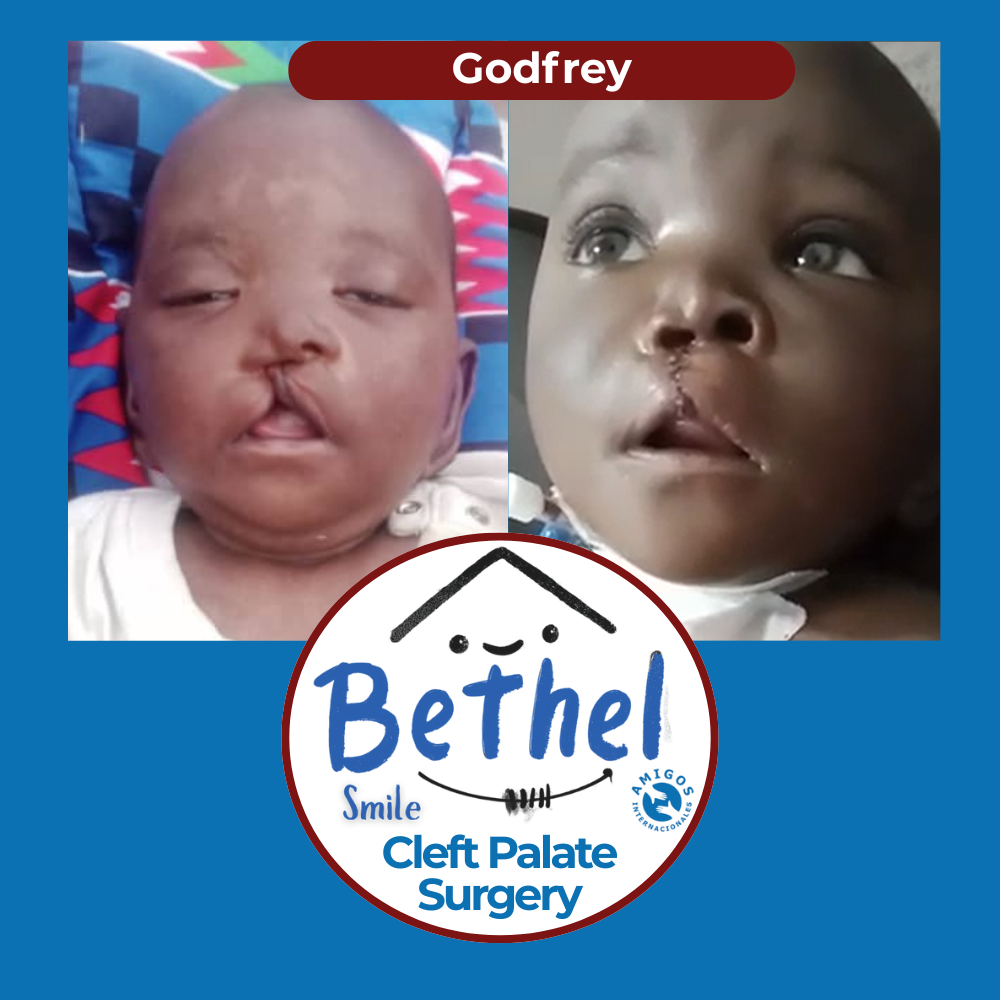
Rwottwero Godfrey before and after cleft lip surgery — Bethel Smile program, Amigos Internacionales
By Amigos Internacionales April 30, 2026
Baby Godfrey couldn't eat without pain. His family couldn't afford surgery. The Bethel Smile program gave him free cleft lip surgery at 4 months old.
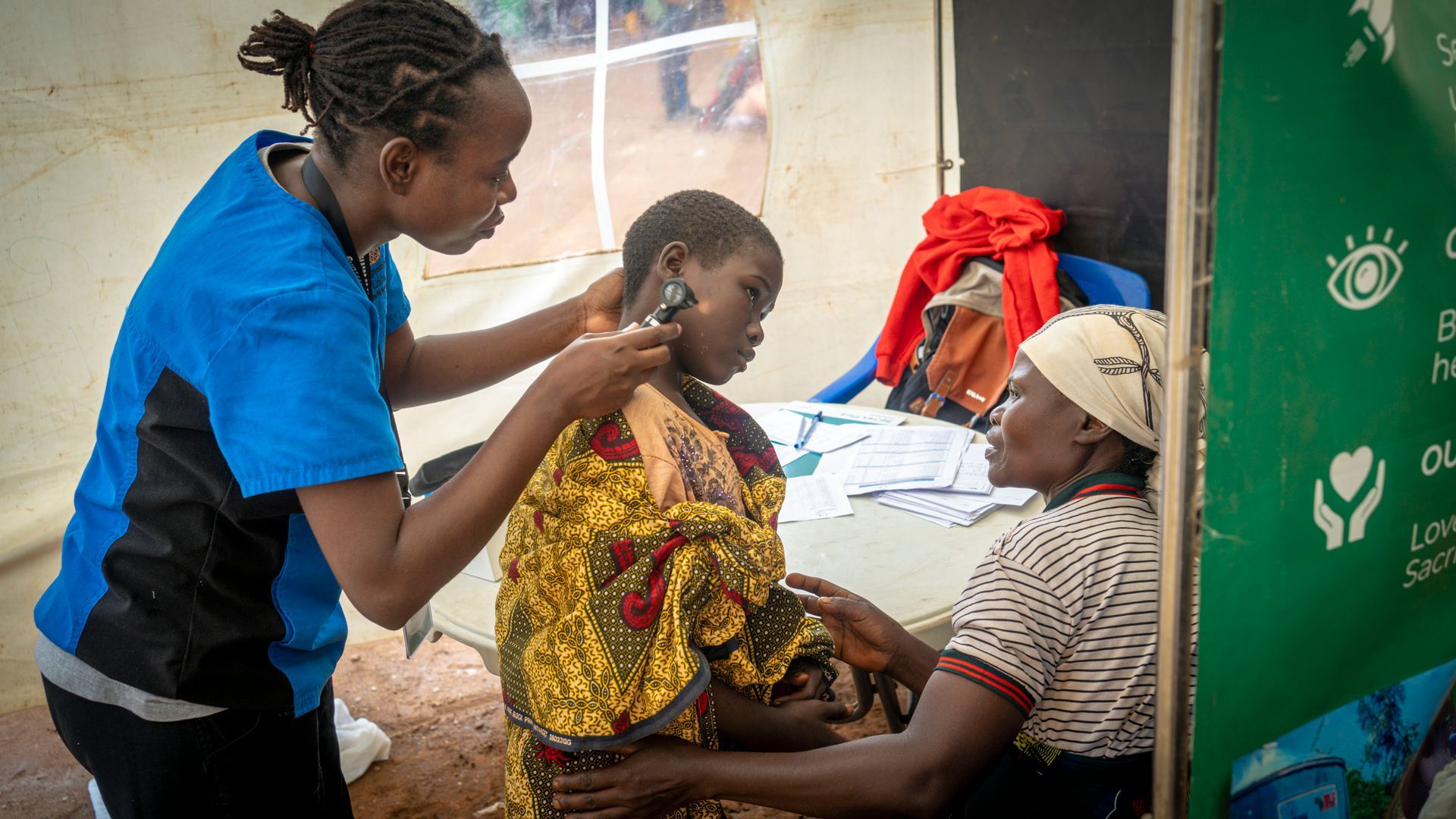
MissionPoint Burundi free medical camp in Gisuru, doctors treating patients
By Amigos Internacionales April 28, 2026
Inside the Gisuru medical camp in Burundi — surgeries, eye care, and spiritual ministry delivered by volunteer doctors. See the full impact report from 2025.
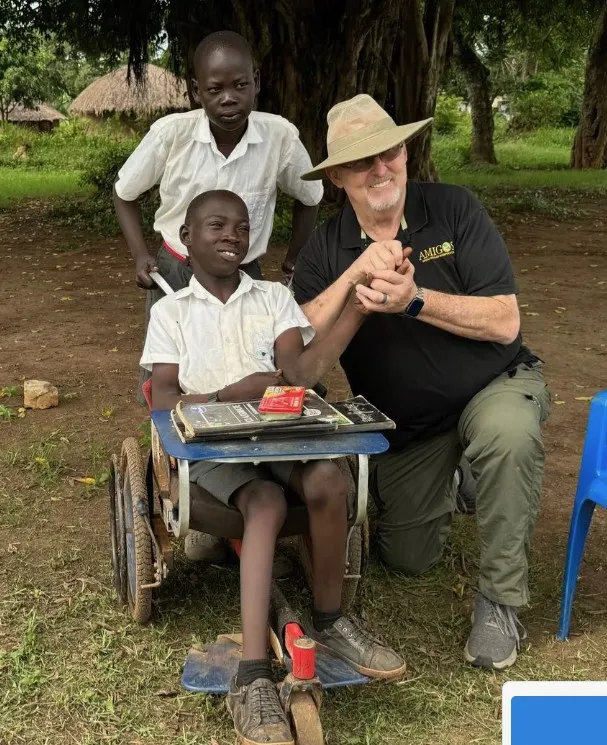
Two people beside a wheelchair outside, with a child seated at a small desk in a grassy outdoor area.
By Amigos Internacionales April 27, 2026
East Texas journalist Jennifer Scott traveled to East Africa to cover Amigos Internacionales. Read the full Tyler Morning Telegraph feature from April 2026.
By Amigos Internacionales April 13, 2026
Learn how church missions in Africa, through partnerships with Amigos Internacionales, can bring lasting change to communities in need. Get involved in education, healthcare, and development projects.
By Amigos Internacionales April 9, 2026
Discover the resilience of refugees in Northern Uganda and how Amigos Internacionales is providing medical care, education, and empowerment to help rebuild lives.
Show More