Effects of Trauma in Africa: Trauma Healing Initiatives for Africa
Amigos Internacionales • January 10, 2024
a blue sky with a few clouds in it
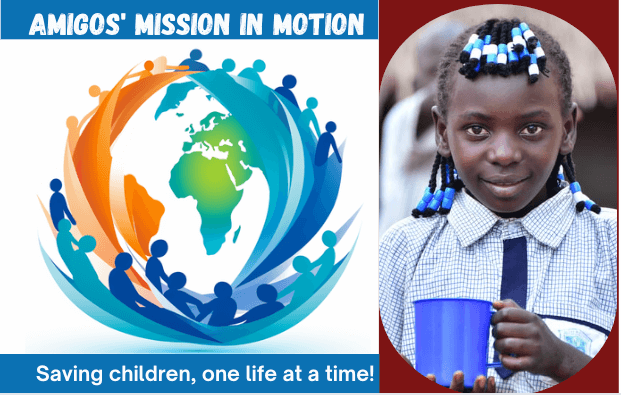
A poster for amigos mission in motion shows a girl holding a cup

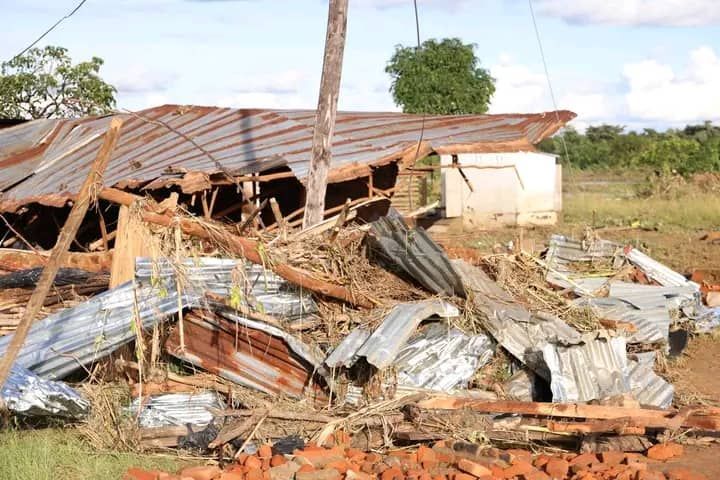
In the vast and diverse landscapes of Africa, the effects of trauma resonate deeply within communities. Trauma, whether stemming from conflict, displacement, or other adverse experiences, leaves an indelible mark on individuals and societies. This blog delves into the complexities of trauma and explores the significance of trauma healing initiatives Africa. Understanding trauma effects Africa anchors our discussion, highlighting the critical role of targeted interventions in fostering recovery.


Understanding Trauma Effects Africa

Trauma is not confined to the immediate circumstances that trigger it; its repercussions reverberate extensively, impacting mental, emotional, and physical well-being. In Africa, understanding trauma effects Africa involves delving into the intricate and diverse experiences that communities endure. Beyond the visible scars, trauma manifests in psychological wounds stemming from conflict, displacement, and a myriad of challenges. A nuanced exploration of these multifaceted effects is crucial for tailoring effective healing initiatives that address the unique and often complex needs of individuals and communities.


Understanding trauma effects Africa emphasizes the broad scope of trauma's influence, transcending the visible to encompass the intricate layers of mental, emotional, and physical well-being. It sets the stage for recognizing the diverse experiences that contribute to the complex tapestry of understanding trauma effects Africa, emphasizing the importance of sensitivity and depth in crafting interventions. Understanding trauma effects Africa in its entirety is foundational to developing strategies that can truly make a difference in the lives of those affected.

Community-Based Trauma Support Africa

Nurturing Resilience in Communities

Community-based trauma support Africa operates on the fundamental understanding that the healing journey is not solitary but a collective endeavor. By acknowledging the interconnectedness of individuals within a community, these initiatives aim to foster a shared sense of understanding and support. Through group interventions, counseling sessions, and community activities, survivors are provided with a supportive environment. This collective approach not only acknowledges the shared experiences of trauma but also empowers individuals by allowing them to draw strength from their community, ultimately nurturing resilience on a communal level.
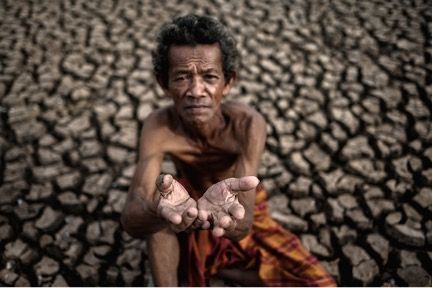
A man is kneeling on the ground with his hands outstretched.

Breaking the Silence

In many African societies, the topic of trauma can be shrouded in stigma, leading to a culture of silence around these issues. Community-based trauma support Africa initiatives actively work to break this silence by establishing safe spaces where individuals feel free to openly express their feelings without fear of judgment. Encouraging open dialogue is crucial in dismantling the stigma associated with discussing trauma. By providing platforms for individuals to share their narratives within the safety of a community, these initiatives play a pivotal role in validating experiences and diminishing the isolation that often accompanies traumatic events. This process not only promotes healing on an individual level but contributes to creating a culture of understanding and empathy within the community.


Post-Traumatic Growth Africa

Transformative Healing

Post-traumatic growth Africa represents the potential for individuals and communities not only to recover from trauma but to emerge stronger. It goes beyond resilience, emphasizing positive change and personal development because of the struggle. Trauma healing initiatives that focus on post-traumatic growth Africa seek to harness the inherent strength within individuals and communities to rebuild and thrive.

Building Resilient Futures

Post-traumatic growth Africa acknowledges that adversity can be a catalyst for positive change. By empowering individuals with the tools to navigate trauma, these initiatives contribute to building more resilient futures. It's not just about overcoming challenges; it's about transforming trauma into an opportunity for growth, strength, and newfound purpose.

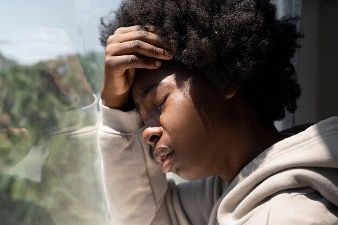
A woman is sitting in front of a window with her hand on her forehead.

Trauma-Informed Care in African Communities

Shifting Paradigms in Healing

Trauma-informed care in African communities represents a paradigm shift in the approach to healing. It emphasizes an understanding of the widespread impact of trauma and integrates this awareness into all aspects of care. From healthcare to education and community development, trauma-informed care in African communities ensures that the effects of trauma are considered in designing supportive and empowering interventions.


Cultivating Empathy and Sensitivity

Trauma-informed care in African communities prioritizes empathy and sensitivity in all interactions. It recognizes that individuals who have experienced trauma may have unique needs and triggers. By fostering a culture of understanding and compassion, these initiatives create environments where survivors feel seen, heard, and supported.


Amigos Internacionales: Nurturing Healing Through Trauma Healing Initiatives

Our Evolving Mission

Founded in 1967, Amigos Internacionales, Inc. has evolved its mission to concentrate on impactful initiatives in Africa through our Missionpoint campaign. Today, our dedication extends to trauma healing initiatives as part of our commitment to building resilient communities.


Driven by Partnerships and Volunteerism

Our trauma healing initiatives are driven by partnerships and volunteerism, leveraging the collective strength of communities and organizations. Through collaboration, we ensure that our initiatives align with the unique needs of the regions we serve, creating a meaningful and sustainable impact.

Transforming Futures Through Faith, Education, and Support

Driven by our vision of creating lasting differences, we focus on transforming the futures of the underprivileged through faith, education, and practical support. Trauma healing initiatives become a vital component of this vision, offering a direct and personal way for individuals to navigate the complexities of trauma.


Why You Need To Donate To Amigos Internacionales?

As we explore the profound effects of trauma and the importance of trauma healing initiatives, the question arises: Why should you donate to Amigos Internacionales? Your contribution to our mission goes beyond financial support; it becomes an investment in transformative change. By supporting trauma healing initiatives, you play a crucial role in empowering individuals and communities to overcome the lasting effects of trauma.

Why donate? Because your support becomes a catalyst for positive change. It enables us to implement trauma-informed care in African communities, community-based trauma support Africa, and initiatives focused on post-traumatic growth Africa. Your donation directly contributes to creating safe spaces for healing, fostering resilience, and nurturing transformative growth.

Join us in our mission to make a lasting difference in the lives of those affected by trauma. Your donation is not just a financial transaction; it is an expression of solidarity with those striving for healing and growth. Donate to Amigos Internacionales and be part of a transformative journey that spans continents and empowers communities to overcome the effects of trauma.

In conclusion, the effects of trauma in Africa are profound, but with targeted initiatives, healing is possible. Amigos Internacionales is committed to being a catalyst for positive change, and your support can make a meaningful impact in fostering resilience, growth, and healing in communities affected by trauma.

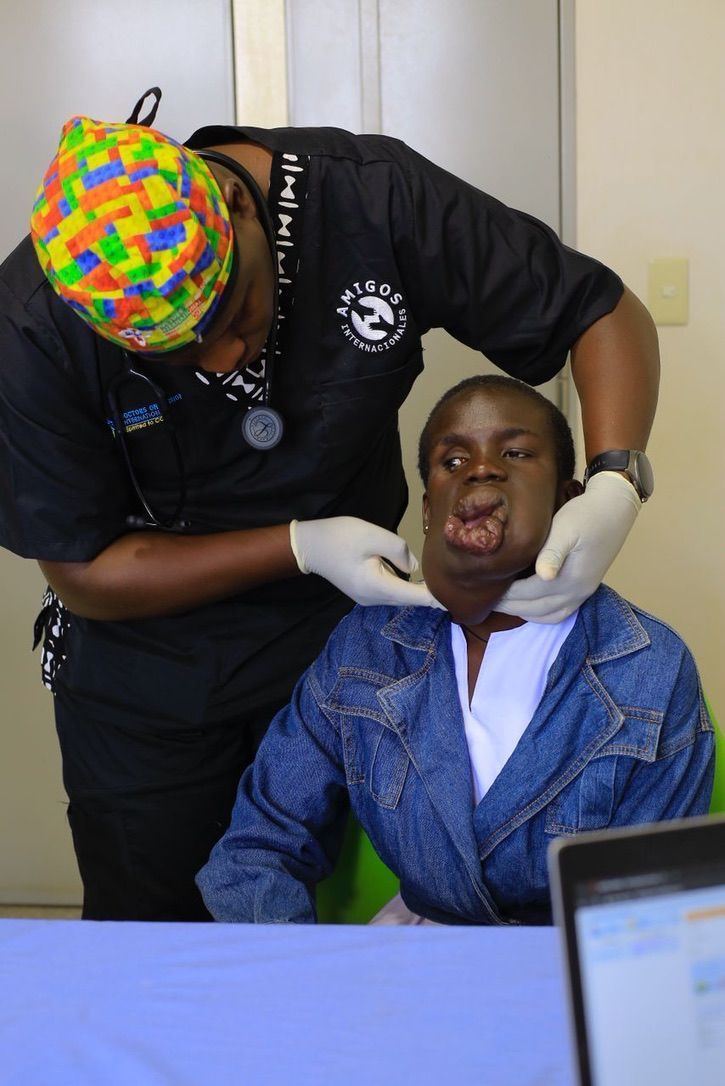
A healthcare provider wearing scrubs and gloves examines a patient with a visible facial growth on their lower jaw.
By Paul Mulyamboga March 13, 2026
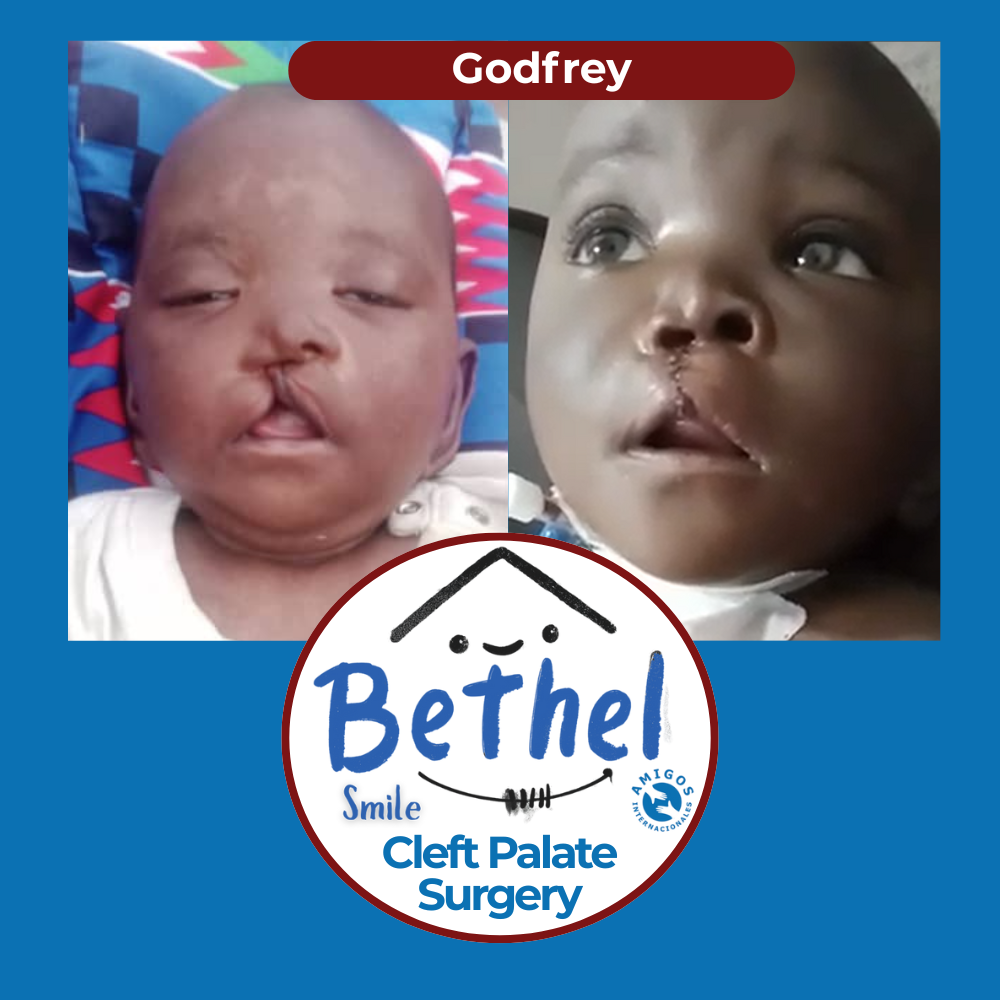
“Discover how Amigos Internacionales brings life‑changing surgery to vulnerable children in rural Uganda, bridging the healthcare gap with compassionate care.”
Three children walking on a dirt road, one carrying a yellow jug, near green foliage.
By Victor Phiri February 26, 2026
In the rural communities of Mulanje District, there are children who wake up every morning ready to learn—but without the tools they need to understand the world around them. They are deaf. And in Malawi today, far too many of them are still waiting for a fair chance at education. At Missionpoint Malawi, in partnership with Amigos International, we are encountering a growing number of deaf children across Mulanje who are eager to learn, connect, and thrive. Yet their path to education is filled with barriers—systemic, social, and economic. This is a call not just for awareness—but for action. The Reality of Deaf Education in Malawi Since the early 2000s, Malawi shifted from a special education model to an inclusive education system. The vision was admirable: to integrate deaf children into mainstream classrooms alongside hearing peers. However, the implementation has revealed serious gaps. Across Malawi, more than 500,000 people are deaf or hard of hearing . Many of these children face: Limited access to quality education A severe shortage of trained teachers in Malawian Sign Language (MSL) Lack of learning materials tailored to deaf students Social isolation in mainstream schools Stigma and discrimination Extreme poverty that prevents access to boarding schools for the deaf While inclusive education is the national policy, many mainstream schools are not equipped to meet the educational needs of deaf learners. Teachers often lack training in sign language. Classrooms move at a pace that excludes deaf children from comprehension. Over time, many children withdraw—not because they lack intelligence, but because they lack access. Isolation Inside the Classroom Qualitative research conducted through Amigos International Mississippi–Malawi in three schools for the deaf and two mainstream schools revealed a troubling pattern. Deaf children in mainstream schools frequently reported: Feeling isolated and lonely Struggling to follow lessons Being unable to communicate effectively with teachers or peers Some children eventually leave mainstream schools and seek enrollment in special schools for the deaf—where they can communicate freely with deaf peers. But these schools are typically boarding institutions, and the costs are too high for many families living in poverty. As a result, some deaf children face an impossible choice: Attend a mainstream school where learning is limited, or Drop out because they cannot afford specialized education. No child should have to choose between belonging and learning. The Situation in Mulanje District In Mulanje alone, Missionpoint Malawi has already identified 60 deaf children in need of immediate support. And early outreach suggests the true number across the district is significantly higher. These children need: Access to Malawian Sign Language instruction Trained teachers or interpreters Specialized teaching materials Safe, inclusive learning environments Community support that reduces stigma Without intervention, many will remain excluded from meaningful education, limiting their future opportunities for employment, independence, and dignity. A Vision for Inclusive and Dignified Support At Missionpoint Malawi and Amigos International, we believe disability inclusion is not optional—it is essential to holistic community transformation. Our vision in Mulanje includes: Partnering with a local Deaf NGO to provide technical guidance Training teachers in Malawian Sign Language Providing learning materials tailored for deaf learners Creating community awareness to reduce stigma Supporting families facing extreme poverty Establishing structured programs that ensure deaf children are not left behind This initiative aligns with our broader commitments to: Education empowerment Child protection Community development Poverty alleviation Faith-based transformation rooted in dignity and compassion When we invest in a deaf child’s education, we are not offering charity—we are unlocking potential. Why This Matters for Malawi’s Future Education is not simply about literacy. It is about identity, opportunity, and voice. When deaf children are excluded: Communities lose future leaders Families remain trapped in poverty National development slows But when deaf children are included: They gain confidence and agency Families experience hope Communities grow stronger The question is not whether deaf children can learn. The question is whether we will provide the access they deserve. How You Can Help This is where compassionate partners and donors make the difference. Your support can help: Train a teacher in Malawian Sign Language Provide educational materials for a deaf child Support outreach to identify more deaf children in Mulanje Establish partnerships with disability-focused organizations Reduce stigma through community awareness programs Every gift becomes a bridge—connecting isolation to inclusion. We are preparing to expand our outreach and will soon document additional deaf children and families in Mulanje. As we meet disability communities across the district, we will share more stories and opportunities for partnership. Together, we can ensure that deaf children in Malawi are no longer invisible.
Surgeon in scrubs, headlight, smiling in operating room, blue drapes, medical equipment.
By Amigos Internacionales February 26, 2026
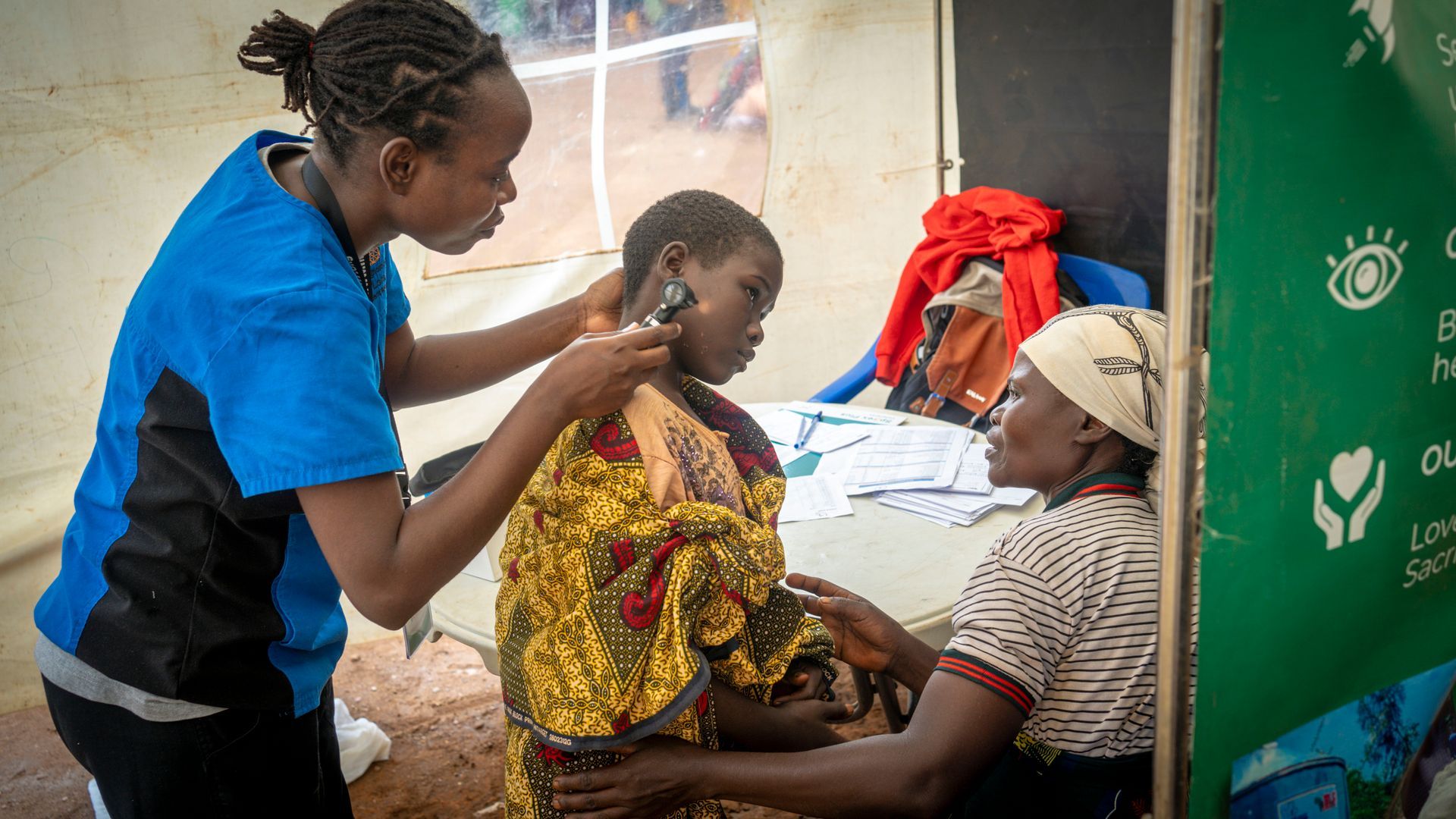
From 3-day medical camps and eye clinics to life skills training for women — discover how Amigos Internacionales brings holistic healing and empowerment to rural Uganda.
Students in uniform stand outside a building with teachers.
By Amigos Internacionales February 26, 2026
Over 700 children attend Amigos Internacionales schools in Uganda and Tanzania. Learn how building classrooms in rural Africa changes the trajectory of entire communities.
Large group of children posing in front of a partially constructed building. Outdoors, daylight.
By Amigos Internacionales February 26, 2026
Real Christian missions in Uganda go beyond short-term trips. Discover how Amigos Internacionales builds lasting faith, community, and change through the MissionPoint model.
Water flows from a metal spout into a concrete basin, a person's legs visible in the background.
February 26, 2026
Waterborne diseases kill thousands in Northern Uganda each year. Learn how Amigos Internacionales is drilling water wells in Gulu and rural Uganda — and how you can help.
Boy in a shirt smiles. He stands outside in front of a fence and trees.
By Amigos Internacionales February 26, 2026
Learn how sponsoring a child in Uganda through Amigos Internacionales provides education, clean water, food, and faith — and how your $38/month changes everything.
Doctor examining a person's mouth and neck, indoors. The person is sitting, and their mouth is open.
By Paul Mulyamboga February 16, 2026
Medical missions refer to organized initiatives that bring healthcare professionals and volunteers to underserved or marginalized communities, both domestically and internationally. These missions aim to provide medical services, treatments, and preventive care to individuals who lack access to adequate healthcare. Medical missions often operate in areas with limited resources, such as remote regions, disaster-stricken areas, or economically disadvantaged communities. At Amigos Internacionales, we reach the most vulnerable communities with much need medical and surgical care through medical and surgical mission while sharing the word of God. Amigos Internacionales Amigos Internacionales is a non-profit organization dedicated to addressing critical needs in underserved communities worldwide. Through initiatives medical camps, educational programs, and infrastructure projects, they strive to foster sustainable development and holistic well-being. Founded in 1967, Amigos Internacionales, Inc. began with a vision to provide emergency services and disaster relief across the globe. Over the years, their mission has evolved, concentrating on impactful initiatives in Africa through their Mission point campaign. Today, they dedicate themselves to building communities by establishing churches, schools, and essential infrastructure like water wells, particularly in regions impacted by the South Sudan refugee crisis. Their commitment extends beyond immediate relief to fostering sustainable development, spiritual growth, and community resilience. Driven by partnerships and volunteerism, we strive to create a lasting difference in the lives of the underprivileged, transforming their futures through faith, education, and practical support.
Group of people working outdoors, shoveling and mixing materials. Building site with a concrete block building.
By Amigos Internacionales February 13, 2026
Discover how Ikonongo Baptist Church in Shinyanga, Tanzania was restored after 14 years of closure. See how local leadership, community labor, and support from Amigos Internacionales sparked revival, baptisms, and church growth.
Group of children in blue school uniforms, laughing in a brick-walled room.
By Victor Phiri February 13, 2026
In Mulanje District, southern Malawi, food insecurity is not an abstract issue—it is a daily reality for many families. Rising food prices, unpredictable rains, and limited household income mean that too many children go to bed hungry. Today, we are setting a clear and urgent goal: To raise $1,000 to provide food support for vulnerable families in Malawi. It is a modest target by global standards. But here in Mulanje, $1,000 can make a tangible and immediate difference.
By Victor Phiri January 28, 2026
When the Rains Fail, Hope Must Take Root Across Mulanje District, the land tells a difficult story. Seasons that once brought dependable rains are now marked by prolonged drought, erratic weather, and declining harvests. Global climate shocks—felt across East and Southern Africa—are hitting rural Malawian families especially hard. When crops fail, it is not just food that disappears, but stability, dignity, and hope.  Widows, children, and smallholder farmers are bearing the heaviest burden. Without irrigation, savings, or access to resilient farming methods, many families are forced to rely on expensive markets or emergency food aid just to survive. Yet even in this hardship, something powerful is growing.
By Victor Phiri January 27, 2026
Protecting Malawi’s Children: Our Commitment Every child deserves more than survival. Every child deserves safety, love, dignity, and the freedom to dream. In Malawi, however—particularly in rural districts like Mulanje—too many children grow up facing risks that no child should ever endure. In 2025 alone, 148,664 cases of child abuse, exploitation, and neglect were reported nationwide. Behind each statistic is a real child—someone’s daughter, son, or sibling—whose childhood was interrupted by violence, forced responsibility, or silence. Harmful practices such as child marriage, child labour, and sexual violence continue to threaten children’s wellbeing, education, and future potential. These realities are painful—but they are not the end of the story.
More Posts

Social Media

A healthcare provider wearing scrubs and gloves examines a patient with a visible facial growth on their lower jaw.
By Paul Mulyamboga March 13, 2026
“Discover how Amigos Internacionales brings life‑changing surgery to vulnerable children in rural Uganda, bridging the healthcare gap with compassionate care.”
Three children walking on a dirt road, one carrying a yellow jug, near green foliage.
By Victor Phiri February 26, 2026
In the rural communities of Mulanje District, there are children who wake up every morning ready to learn—but without the tools they need to understand the world around them. They are deaf. And in Malawi today, far too many of them are still waiting for a fair chance at education. At Missionpoint Malawi, in partnership with Amigos International, we are encountering a growing number of deaf children across Mulanje who are eager to learn, connect, and thrive. Yet their path to education is filled with barriers—systemic, social, and economic. This is a call not just for awareness—but for action. The Reality of Deaf Education in Malawi Since the early 2000s, Malawi shifted from a special education model to an inclusive education system. The vision was admirable: to integrate deaf children into mainstream classrooms alongside hearing peers. However, the implementation has revealed serious gaps. Across Malawi, more than 500,000 people are deaf or hard of hearing . Many of these children face: Limited access to quality education A severe shortage of trained teachers in Malawian Sign Language (MSL) Lack of learning materials tailored to deaf students Social isolation in mainstream schools Stigma and discrimination Extreme poverty that prevents access to boarding schools for the deaf While inclusive education is the national policy, many mainstream schools are not equipped to meet the educational needs of deaf learners. Teachers often lack training in sign language. Classrooms move at a pace that excludes deaf children from comprehension. Over time, many children withdraw—not because they lack intelligence, but because they lack access. Isolation Inside the Classroom Qualitative research conducted through Amigos International Mississippi–Malawi in three schools for the deaf and two mainstream schools revealed a troubling pattern. Deaf children in mainstream schools frequently reported: Feeling isolated and lonely Struggling to follow lessons Being unable to communicate effectively with teachers or peers Some children eventually leave mainstream schools and seek enrollment in special schools for the deaf—where they can communicate freely with deaf peers. But these schools are typically boarding institutions, and the costs are too high for many families living in poverty. As a result, some deaf children face an impossible choice: Attend a mainstream school where learning is limited, or Drop out because they cannot afford specialized education. No child should have to choose between belonging and learning. The Situation in Mulanje District In Mulanje alone, Missionpoint Malawi has already identified 60 deaf children in need of immediate support. And early outreach suggests the true number across the district is significantly higher. These children need: Access to Malawian Sign Language instruction Trained teachers or interpreters Specialized teaching materials Safe, inclusive learning environments Community support that reduces stigma Without intervention, many will remain excluded from meaningful education, limiting their future opportunities for employment, independence, and dignity. A Vision for Inclusive and Dignified Support At Missionpoint Malawi and Amigos International, we believe disability inclusion is not optional—it is essential to holistic community transformation. Our vision in Mulanje includes: Partnering with a local Deaf NGO to provide technical guidance Training teachers in Malawian Sign Language Providing learning materials tailored for deaf learners Creating community awareness to reduce stigma Supporting families facing extreme poverty Establishing structured programs that ensure deaf children are not left behind This initiative aligns with our broader commitments to: Education empowerment Child protection Community development Poverty alleviation Faith-based transformation rooted in dignity and compassion When we invest in a deaf child’s education, we are not offering charity—we are unlocking potential. Why This Matters for Malawi’s Future Education is not simply about literacy. It is about identity, opportunity, and voice. When deaf children are excluded: Communities lose future leaders Families remain trapped in poverty National development slows But when deaf children are included: They gain confidence and agency Families experience hope Communities grow stronger The question is not whether deaf children can learn. The question is whether we will provide the access they deserve. How You Can Help This is where compassionate partners and donors make the difference. Your support can help: Train a teacher in Malawian Sign Language Provide educational materials for a deaf child Support outreach to identify more deaf children in Mulanje Establish partnerships with disability-focused organizations Reduce stigma through community awareness programs Every gift becomes a bridge—connecting isolation to inclusion. We are preparing to expand our outreach and will soon document additional deaf children and families in Mulanje. As we meet disability communities across the district, we will share more stories and opportunities for partnership. Together, we can ensure that deaf children in Malawi are no longer invisible.
Surgeon in scrubs, headlight, smiling in operating room, blue drapes, medical equipment.
By Amigos Internacionales February 26, 2026
From 3-day medical camps and eye clinics to life skills training for women — discover how Amigos Internacionales brings holistic healing and empowerment to rural Uganda.
Students in uniform stand outside a building with teachers.
By Amigos Internacionales February 26, 2026
Over 700 children attend Amigos Internacionales schools in Uganda and Tanzania. Learn how building classrooms in rural Africa changes the trajectory of entire communities.
Large group of children posing in front of a partially constructed building. Outdoors, daylight.
By Amigos Internacionales February 26, 2026
Real Christian missions in Uganda go beyond short-term trips. Discover how Amigos Internacionales builds lasting faith, community, and change through the MissionPoint model.
Water flows from a metal spout into a concrete basin, a person's legs visible in the background.
February 26, 2026
Waterborne diseases kill thousands in Northern Uganda each year. Learn how Amigos Internacionales is drilling water wells in Gulu and rural Uganda — and how you can help.
Boy in a shirt smiles. He stands outside in front of a fence and trees.
By Amigos Internacionales February 26, 2026
Learn how sponsoring a child in Uganda through Amigos Internacionales provides education, clean water, food, and faith — and how your $38/month changes everything.
Doctor examining a person's mouth and neck, indoors. The person is sitting, and their mouth is open.
By Paul Mulyamboga February 16, 2026
Medical missions refer to organized initiatives that bring healthcare professionals and volunteers to underserved or marginalized communities, both domestically and internationally. These missions aim to provide medical services, treatments, and preventive care to individuals who lack access to adequate healthcare. Medical missions often operate in areas with limited resources, such as remote regions, disaster-stricken areas, or economically disadvantaged communities. At Amigos Internacionales, we reach the most vulnerable communities with much need medical and surgical care through medical and surgical mission while sharing the word of God. Amigos Internacionales Amigos Internacionales is a non-profit organization dedicated to addressing critical needs in underserved communities worldwide. Through initiatives medical camps, educational programs, and infrastructure projects, they strive to foster sustainable development and holistic well-being. Founded in 1967, Amigos Internacionales, Inc. began with a vision to provide emergency services and disaster relief across the globe. Over the years, their mission has evolved, concentrating on impactful initiatives in Africa through their Mission point campaign. Today, they dedicate themselves to building communities by establishing churches, schools, and essential infrastructure like water wells, particularly in regions impacted by the South Sudan refugee crisis. Their commitment extends beyond immediate relief to fostering sustainable development, spiritual growth, and community resilience. Driven by partnerships and volunteerism, we strive to create a lasting difference in the lives of the underprivileged, transforming their futures through faith, education, and practical support.
Group of people working outdoors, shoveling and mixing materials. Building site with a concrete block building.
By Amigos Internacionales February 13, 2026
Discover how Ikonongo Baptist Church in Shinyanga, Tanzania was restored after 14 years of closure. See how local leadership, community labor, and support from Amigos Internacionales sparked revival, baptisms, and church growth.
Group of children in blue school uniforms, laughing in a brick-walled room.
By Victor Phiri February 13, 2026
In Mulanje District, southern Malawi, food insecurity is not an abstract issue—it is a daily reality for many families. Rising food prices, unpredictable rains, and limited household income mean that too many children go to bed hungry. Today, we are setting a clear and urgent goal: To raise $1,000 to provide food support for vulnerable families in Malawi. It is a modest target by global standards. But here in Mulanje, $1,000 can make a tangible and immediate difference.
By Victor Phiri January 28, 2026
When the Rains Fail, Hope Must Take Root Across Mulanje District, the land tells a difficult story. Seasons that once brought dependable rains are now marked by prolonged drought, erratic weather, and declining harvests. Global climate shocks—felt across East and Southern Africa—are hitting rural Malawian families especially hard. When crops fail, it is not just food that disappears, but stability, dignity, and hope.  Widows, children, and smallholder farmers are bearing the heaviest burden. Without irrigation, savings, or access to resilient farming methods, many families are forced to rely on expensive markets or emergency food aid just to survive. Yet even in this hardship, something powerful is growing.
By Victor Phiri January 27, 2026
Protecting Malawi’s Children: Our Commitment Every child deserves more than survival. Every child deserves safety, love, dignity, and the freedom to dream. In Malawi, however—particularly in rural districts like Mulanje—too many children grow up facing risks that no child should ever endure. In 2025 alone, 148,664 cases of child abuse, exploitation, and neglect were reported nationwide. Behind each statistic is a real child—someone’s daughter, son, or sibling—whose childhood was interrupted by violence, forced responsibility, or silence. Harmful practices such as child marriage, child labour, and sexual violence continue to threaten children’s wellbeing, education, and future potential. These realities are painful—but they are not the end of the story.
By Amigos Internacionales January 21, 2026
A story of generosity, healing, and the quiet power of faithful stewardship Most people assume that meaningful healthcare requires massive budgets, permanent buildings, and years of infrastructure. But in 2025, across some of the most underserved regions of East Africa, something quietly extraordinary happened. With $142,000 in donor support , volunteer medical teams delivered over $10.1 million worth of medical care —completely free to patients who otherwise would have gone without. That’s not a typo. This is the story of how generosity multiplied, how dignity was protected, and how healing reached places the healthcare system cannot.
By Amigos Internacionales January 12, 2026
For five days in Arua , something remarkable unfolded. There were no glossy hospital corridors. No insurance cards. No families with the ability to pay. There were only children —many born with conditions that would quietly steal their future if left untreated—and a group of volunteer surgeons, nurses, anesthetists, and ministry partners willing to step in. What happened next is a story of extraordinary stewardship , medical excellence , and eternal impact .
nonprofit helping Africa, clean water Uganda, child sponsorship AfricaChristian nonprofit Africa
By Amigos Internacionales December 24, 2025
Discover how Amigos Internacionales is transforming African communities through clean water, education, medical care, and sustainable development using a holistic MissionPoint model.
Woman and two children stand outside a rough building; woman in floral dress, children in worn clothes.
By Michael Ryer December 15, 2025
Where the Shadows Hide The first time I looked into the eyes of a child rescued from trafficking, I realized this issue isn’t simply about statistics—it’s about stolen stories. It’s about what happens when humanity forgets who we are and whom we belong to. Sex trafficking is not confined to distant countries or dark alleyways. It’s in border towns, business districts, and even in the quiet suburbs of America. It is the visible symptom of invisible wounds—poverty, broken systems, and spiritual disconnection. Through the work of Amigos Internacionales , I’ve seen how easily desperation becomes a doorway. Traffickers exploit the most sacred human need—to be seen, valued, and loved—and twist it into bondage. But I’ve also seen how faith and community can transform that same desperation into hope. The Crossroads of Trauma and Transformation In my book, The Choice That Can Change the World, I write that every one of us stands at a crossroads where trauma meets transformation. Survivors of trafficking know this crossroads intimately. “Every painful memory holds within it an invitation to rise above and forge anew.” — The Choice That Can Change the World When a life has been shattered by exploitation, healing begins not with forgetting, but with choosing. Choosing to believe that renewal is still possible. Choosing to accept that even in the ruins, God can rebuild something beautiful. For many survivors, the journey from trauma to triumph begins the same way faith always begins—with a choice. “Now choose life,” says Deuteronomy 30:19, “so that you and your children may live.” That command is not just for the victim. It’s for the rescuer, the leader, the bystander, the church, and the CEO. Each of us must choose life in how we lead, how we serve, and how we see those society has cast aside.
Young lady with a visible facial difference, speaking in front of a rural dwelling.
By Amigos Internacionales November 21, 2025
In the heart of Palabek Settlement, within the humble boundaries of Zone 5A, Block 5A, lives a young girl whose story reflects both the deep wounds of conflict and the unbreakable strength of the human spirit. She is 17 years old. Her name — shared with us by one of our local mission pastors — is Winning Ibalú Mario . And although life has marked her with a devastating injury, her presence radiates a quiet courage that calls us to act.
Poster for Arua Children's Surgical Camp in Uganda, featuring children and text with contact info.
By Amigos Internacionales November 14, 2025
In West Nile, Uganda, there are children who have never known a single day without pain.  Some live with hernias that keep them from running and playing. Others were born with anorectal malformations or hypospadias, conditions that make something as simple as using the bathroom or going to school deeply shameful and physically painful. Many have treatable masses, cysts, or congenital conditions that slowly steal their childhood. Their parents know something is wrong. They’ve walked for miles, waited in crowded clinics, and prayed for a solution. But surgery is expensive, specialists are rare, and for families living in poverty, the cost is simply impossible.
Poster for Nigeria eye care medical mission, 40 days to go. Featuring a child's eye, white and black text.
By Amigos Internacionales November 10, 2025
In December, we will host a vital eye camp in Nigeria, providing essential eye care services to underserved communities. Our efforts included free eye examinations, consultations, and treatments, impacting the lives of many who lacked access to such care. Thanks to your incredible support.
Gilead Clinics logo:
By Amigos Internacionales October 1, 2025
After decades of walking alongside vulnerable communities through surgical missions, mobile outreaches, and emergency relief, Amigos Internacionales and Doctors on Mission International are stepping into a new season of impact with the launch of Gilead Clinics . These monthly clinics, strategically planted at each Mission Point, are more than just health posts—they are beacons of consistent care, spiritual encouragement, and sustainable transformation.
Show More