The Scourge of Child Labor: What You Need to Know
Michael Ryer • October 17, 2023
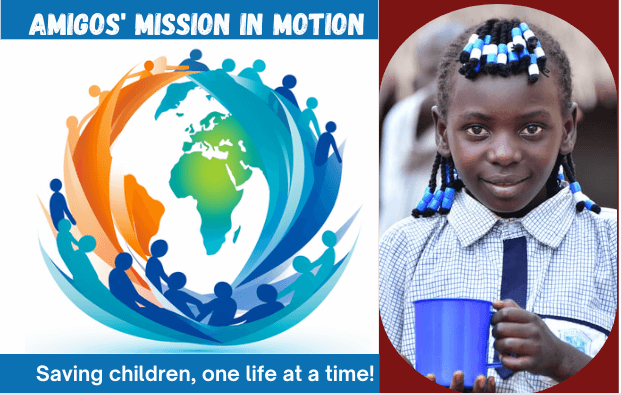
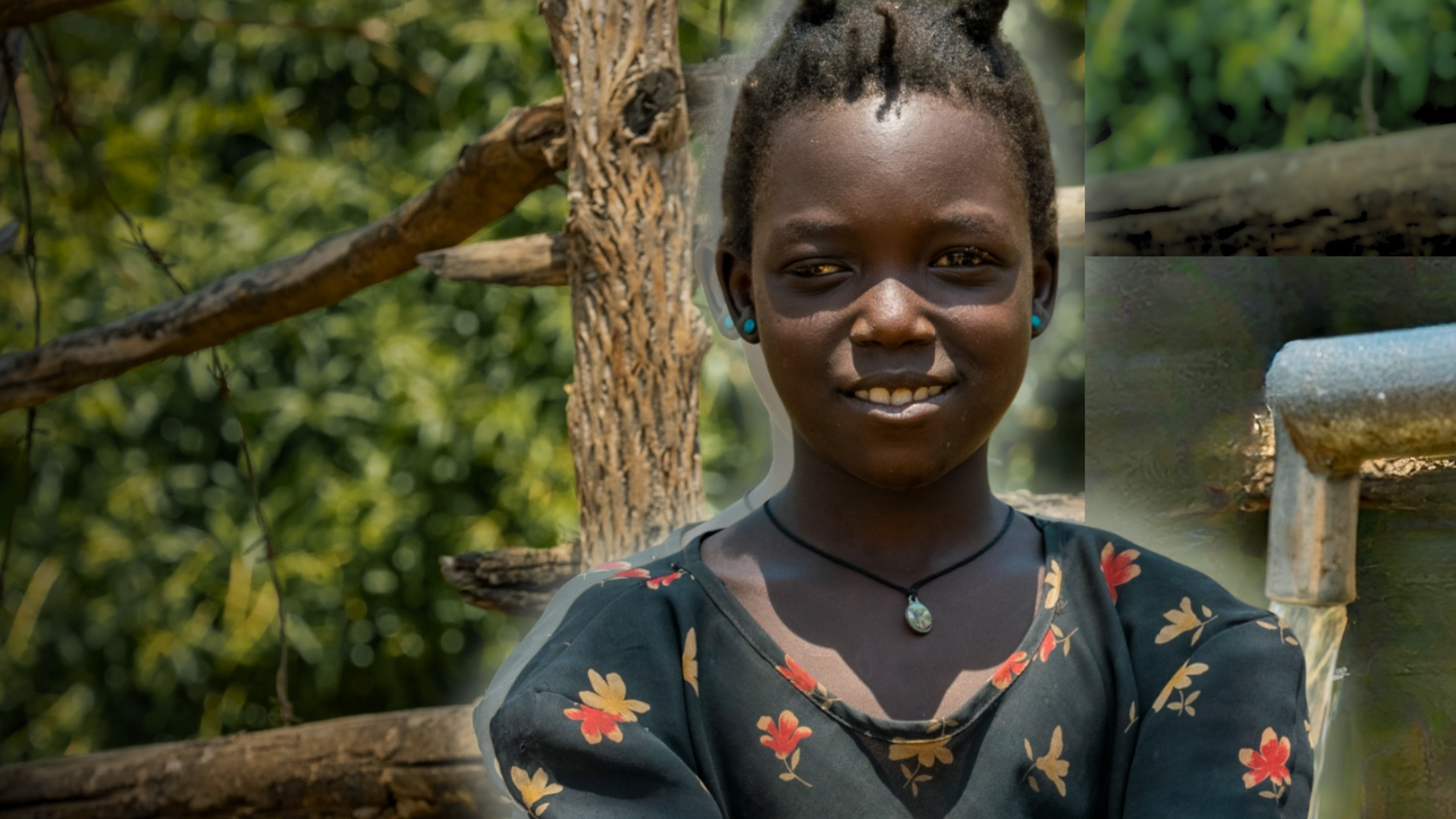
A poster for amigos mission in motion shows a girl holding a cup

The Root Causes of Child Labor

Child labor remains a pressing issue globally, robbing numerous children of a bright and joyful future. The root causes behind this menace are deeply entrenched in various socio-economic and cultural factors. Let's delve deep into understanding the reasons behind child labor.

What is child labor?

Child labor is a term that many misunderstand. It's not just about children helping out a family member at home or assisting in small chores.


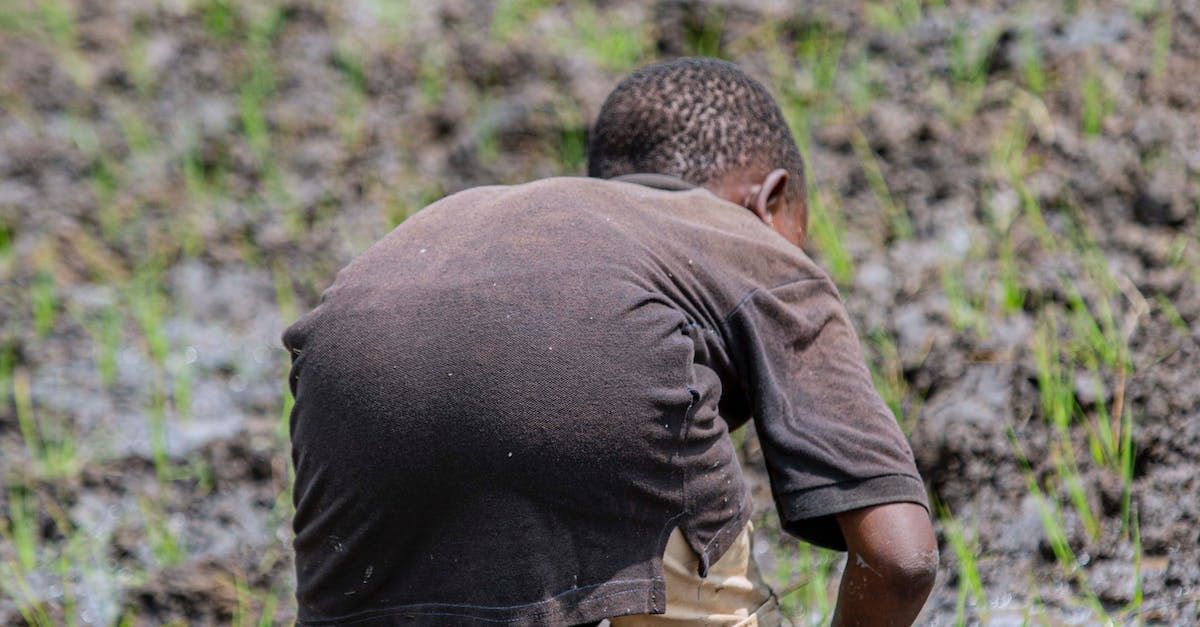
Imagine children, some as young as five or six, being thrust into environments like factories, mines, or street markets. Instead of attending school, forming friendships, or simply enjoying the innocence of their simple childhood, these kids find themselves working long hours in hard places.


They're often in places where the basic rights of clean water or a safe environment are denied. Many people, when thinking about child labor, might recall images of kids in developing countries.


However, the truth is that even in developed regions, including parts of the United States, children can be found working in conditions unsuitable for their age. The effects of child labor aren't confined to the loss of education or leisure; it's a profound loss of innocence, well-being, and the fundamental joys that define childhood.

Why do children work?

The causes of child labor, especially outside the United States and other developing countries, often come from deep-rooted issues:

  1. Poverty: This is often the most significant reason. In rural areas where food insecurity is rampant, families often don't have access to clean water or stable income sources. Children, in their quest to support their family members, are compelled to work. Such circumstances lead to a rising number of children living in poverty, missing out on attending school, and being thrust into the labor force at tender ages.
  2. Educational Barriers: Lack of quality education plays a massive role. In many places, schools are either non-existent or are too expensive for families already grappling with food insecurity. When attending school becomes a challenge, work becomes the alternative. This not only perpetuates the cycle of poverty but also robs children of their potential future. An uneducated child grows into an adult with limited opportunities, often continuing the cycle with their own children.
  3. Societal Norms: Societal norms and expectations play a more significant role than one might think. In many cultures, there's an unspoken rule: children follow in a family member's footsteps from a young age. This might mean diving into domestic work, assisting in agricultural tasks, or apprenticing in traditional crafts. These roles, while culturally significant, often don't prioritize the child's well-being or education. The worst forms of child labor, unfortunately, are sometimes normalized or overlooked due to these deep-rooted traditions.
  4. Lack of Awareness: Many people don't know the worst forms of child labor. They might not understand how harmful it is, thinking they're doing what's best for their child. For example, some children face the worst form of exploitation, like trafficking or forced labor.

Some Hard Hitting Facts:

When we talk numbers, the scale of the issue becomes clear:


Conclusion:

The effects of child labor ripple through countries, from developed nations to those grappling with armed conflict. While many believe it's mainly a problem in developing countries, even places like the United States aren't free from it.


It's important to remember that every child, whether in a bustling city or rural areas, deserves a chance at a bright future. The fact that so many are stuck in labor, from domestic work in homes to conflict zones, is a call to action.


Amigos Internacionales offers a full line of children's programs that are specifically designed to address and alleviate a range of hard issues. Through educational, recreational, and support initiatives, we aim to provide children with the tools and resources they need to overcome challenges, develop essential life skills, and reach their full potential. By participating in our programs, children not only gain a safe and nurturing environment but also a foundation for a brighter future. 

A black and white photo of a group of children sitting on the ground
By Michael Ryer June 9, 2026
A Pentecost outreach by Pastor Abogasti became the founding of Mwakalundi Baptist Church — 80 baptized believers, first worship under a tree, in Tanzania.
By Victor Phiri June 1, 2026
By Warren Olgado May 25, 2026
In a small rural village in Tanzania, a man sits quietly outside his home. His body is thin. His shoulders are tired. And rising from his back is a painful tumor that has slowly stolen nearly everything from him. His name is Zakaria. For years, Zakaria worked as a boda boda driver, carrying passengers from village to village on his motorcycle. In East Africa, a boda boda is more than transportation. For many families, it is survival. Every ride meant food. Every mile meant provision. Every long day on rough roads meant another opportunity to care for his wife and continue moving forward. But suffering often enters quietly. What began as a hitching pain in Zakaria’s back slowly became swelling. At first, it was manageable. Like many men trying to provide for their families, he pushed through the discomfort and kept working. But the pain continued. The swelling grew. And over time, the tumor became impossible to ignore. Today, Zakaria lives with constant pain and uncertainty. The disease has robbed him of strength, dignity, income, and peace. The motorcycle he once depended on has already been sold in a desperate attempt to find healing. And yet, in the middle of suffering, something unexpected happened. Hope arrived.
By Michael Ryer May 20, 2026
In many parts of the world, turning on a faucet is so ordinary that it barely deserves a second thought. A glass fills. A child drinks. A mother does the dishes. A shower runs before work or school. Clean water is simply there. In Northern Uganda, that reality still feels distant for thousands of families. In many villages scattered across rural East Africa, water is not found in a kitchen sink or flowing from pipes beneath the ground. It is carried in yellow jerrycans across dusty roads and narrow footpaths. It is gathered from muddy ponds, shallow holes carved into the earth, or stagnant pools shared with livestock. Sometimes it is brown. Sometimes it smells foul. Sometimes it makes children sick. For families with no other option, it is all they have. The water crisis in East Africa is not only about thirst. It affects health, education, safety, opportunity, and dignity. It shapes how children spend their mornings and how mothers spend their days. It determines whether girls attend school consistently or remain trapped in long daily walks carrying heavy containers of water under the scorching sun. At Amigos Internacionales, this reality is not theoretical. Staff and partners have sat beside families in remote villages. They have watched children scoop water from contaminated pits after rainfall. They have seen entire communities transformed when clean water finally arrived. That transformation is why water remains one of the most urgent and powerful parts of the MissionPoint model across Northern Uganda.
By Michael Ryer May 13, 2026
For seventeen years, Bridgette has carried a burden no child should ever bear. What started as a small red spot on her face when she was just a baby grew into a massive vascular tumor that doctors across Uganda refused to operate on. Too risky, they said. The tumor could bleed too much. She might not survive. Come back when she's older. Come back when it's smaller. Come back, come back, come back. Bridgette and her mother, Rose, heard "no" for seventeen years. But today, something has finally changed. Bridgette is now on medication that is actively shrinking her tumor. Dr. Paul Mulyamboga, Amigos Internacionales' Director of Medical Services and founder of Doctors on Mission, is monitoring her progress. When the tumor reaches an operable size, he will refer her to Mulago National Referral Hospital in Kampala for the vascular surgery that could change her life. There's just one problem: surgery can only happen if the funding is already in place . If we don't raise $12,000 before Bridgette's tumor is ready for surgery, she will have to wait again. And after seventeen years of waiting, we cannot let that happen. How It Started — A Small Red Spot
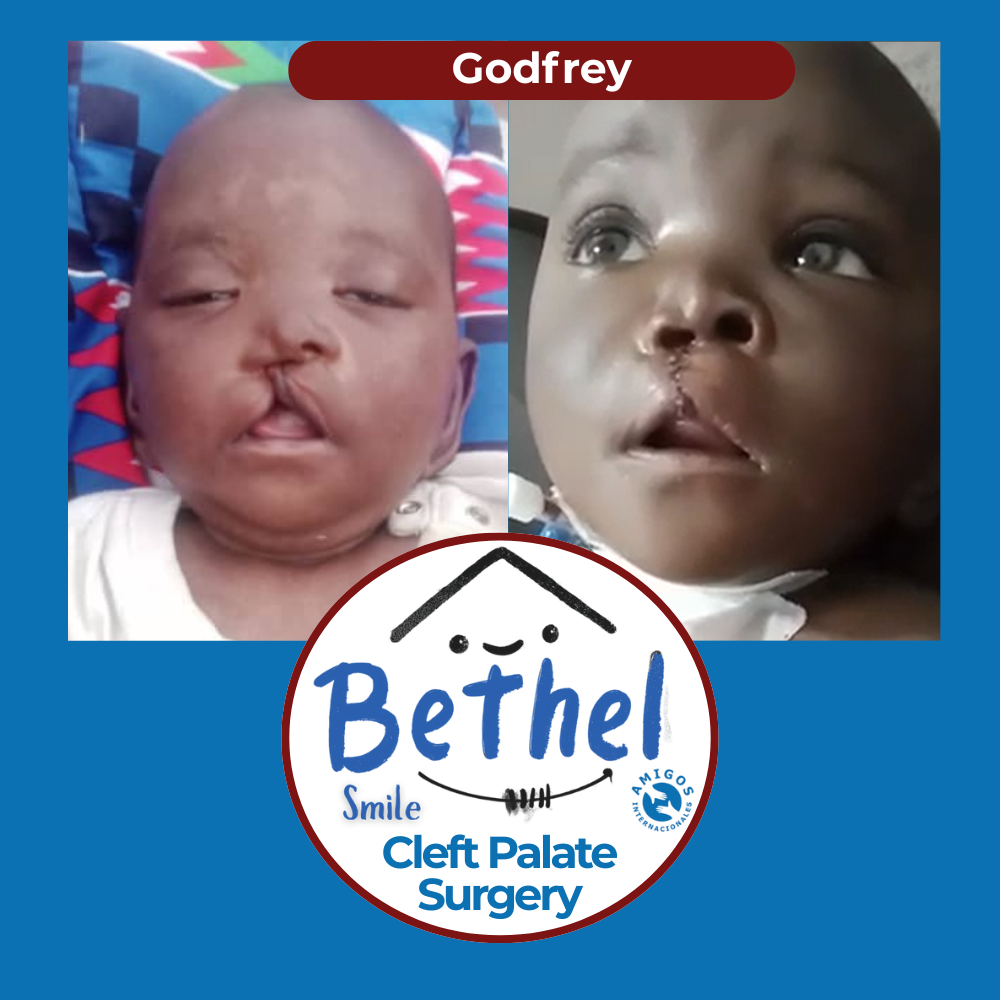
Rwottwero Godfrey before and after cleft lip surgery — Bethel Smile program, Amigos Internacionales
By Amigos Internacionales April 30, 2026
Baby Godfrey couldn't eat without pain. His family couldn't afford surgery. The Bethel Smile program gave him free cleft lip surgery at 4 months old.
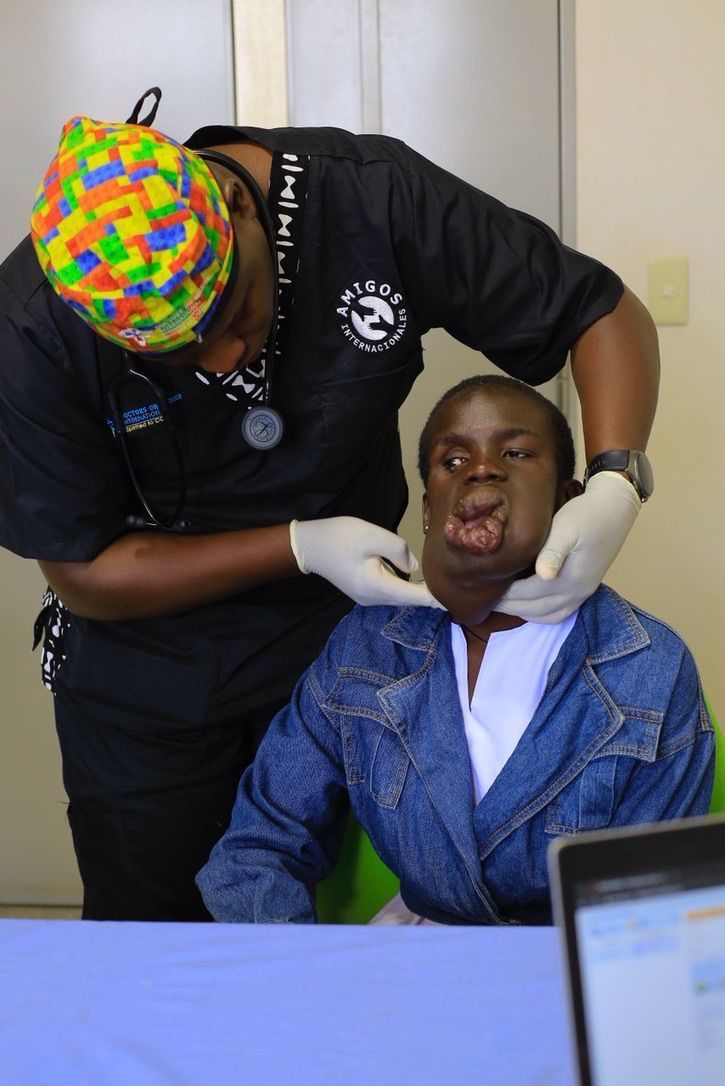
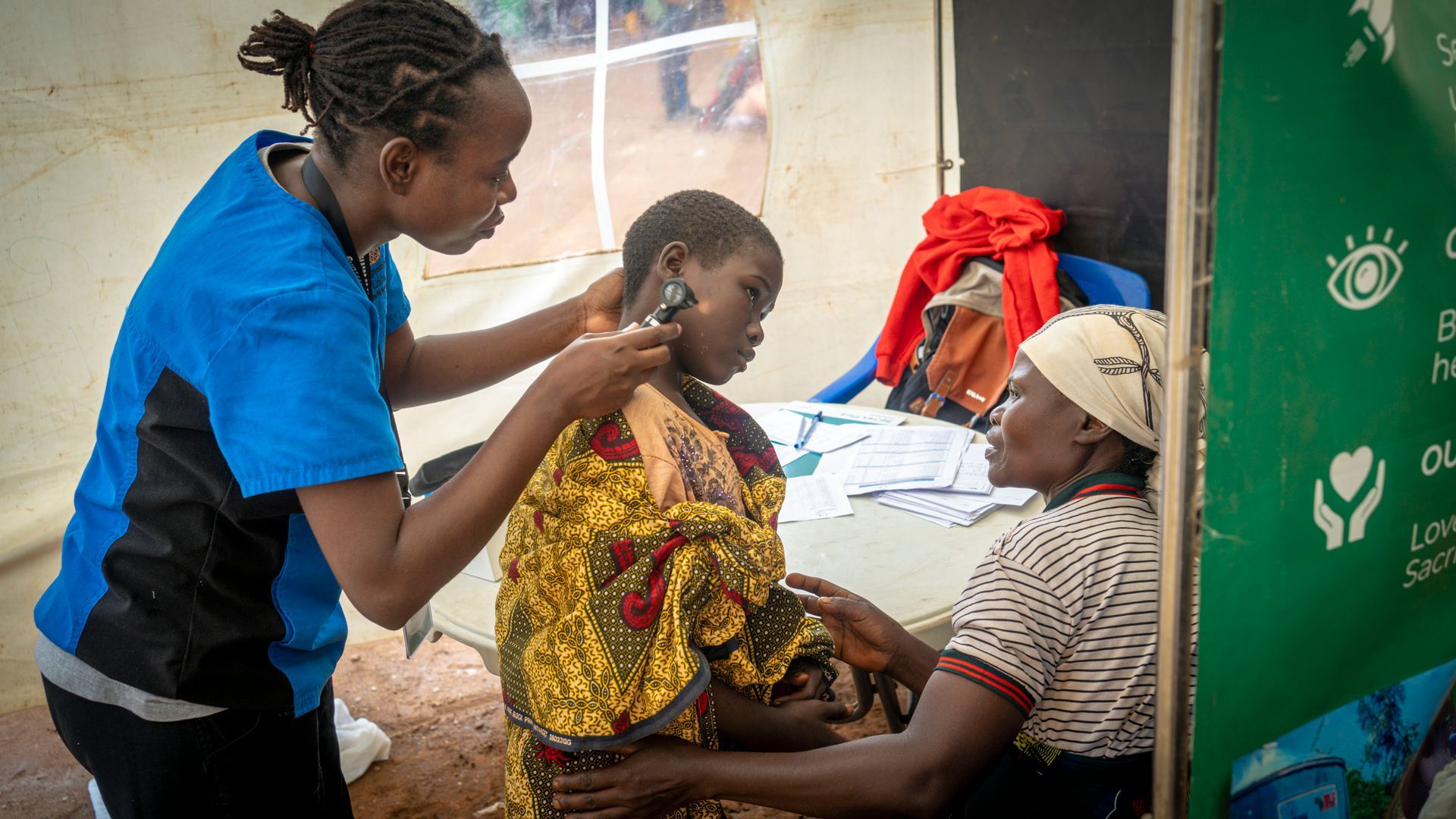
MissionPoint Burundi free medical camp in Gisuru, doctors treating patients
By Amigos Internacionales April 28, 2026
Inside the Gisuru medical camp in Burundi — surgeries, eye care, and spiritual ministry delivered by volunteer doctors. See the full impact report from 2025.
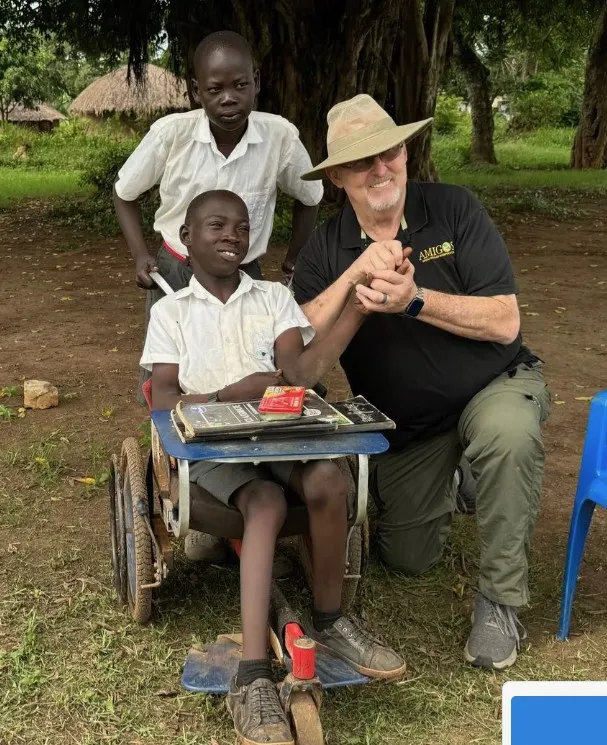
Two people beside a wheelchair outside, with a child seated at a small desk in a grassy outdoor area.
By Amigos Internacionales April 27, 2026
East Texas journalist Jennifer Scott traveled to East Africa to cover Amigos Internacionales. Read the full Tyler Morning Telegraph feature from April 2026.
By Amigos Internacionales April 13, 2026
Learn how church missions in Africa, through partnerships with Amigos Internacionales, can bring lasting change to communities in need. Get involved in education, healthcare, and development projects.
By Amigos Internacionales April 9, 2026
Discover the resilience of refugees in Northern Uganda and how Amigos Internacionales is providing medical care, education, and empowerment to help rebuild lives.
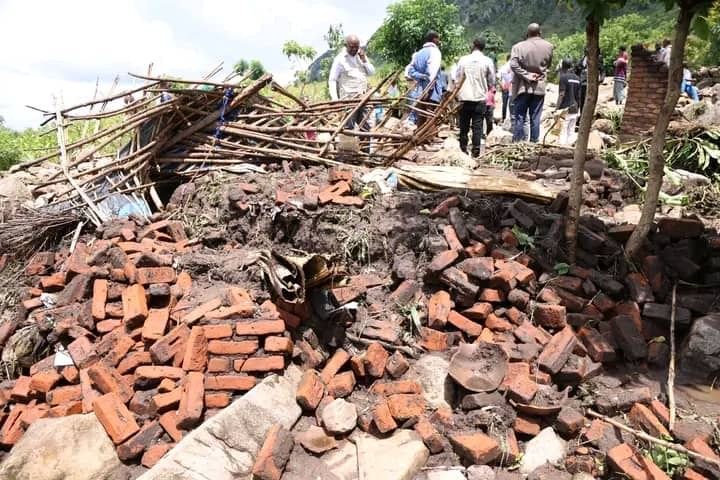
People stand near the ruins of a collapsed brick building in a grassy, mountainous area.
By Victor Phiri April 4, 2026
Deadly floods and landslides have displaced families in Malawi’s Mulanje and Phalombe districts, leaving them without shelter or food. Learn how emergency tents and food relief can bring hope—and how you can help today.
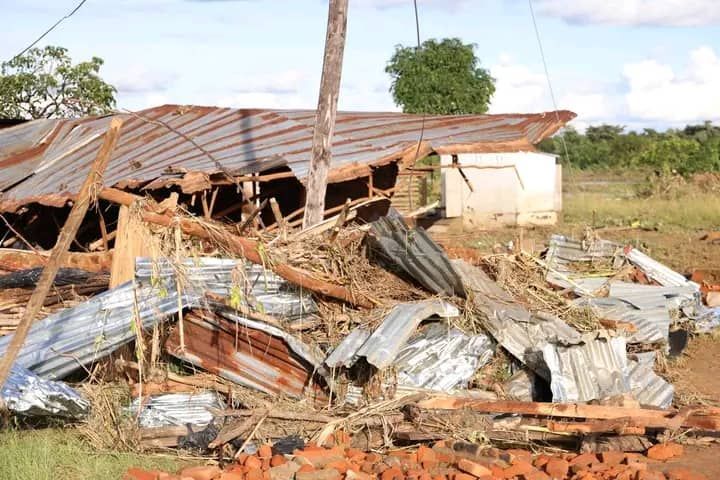
A collapsed building with twisted metal roofing, wooden debris, and scattered bricks in a rural, open-field setting.
By Victor Phiri April 1, 2026
Missionpoint Malawi aids flood victims in Mulanje & Phalombe. Help us provide food & support to families in need. Join our efforts today!
More Posts

Social Media

By Michael Ryer June 9, 2026
A Pentecost outreach by Pastor Abogasti became the founding of Mwakalundi Baptist Church — 80 baptized believers, first worship under a tree, in Tanzania.
By Victor Phiri June 1, 2026
By Warren Olgado May 25, 2026
In a small rural village in Tanzania, a man sits quietly outside his home. His body is thin. His shoulders are tired. And rising from his back is a painful tumor that has slowly stolen nearly everything from him. His name is Zakaria. For years, Zakaria worked as a boda boda driver, carrying passengers from village to village on his motorcycle. In East Africa, a boda boda is more than transportation. For many families, it is survival. Every ride meant food. Every mile meant provision. Every long day on rough roads meant another opportunity to care for his wife and continue moving forward. But suffering often enters quietly. What began as a hitching pain in Zakaria’s back slowly became swelling. At first, it was manageable. Like many men trying to provide for their families, he pushed through the discomfort and kept working. But the pain continued. The swelling grew. And over time, the tumor became impossible to ignore. Today, Zakaria lives with constant pain and uncertainty. The disease has robbed him of strength, dignity, income, and peace. The motorcycle he once depended on has already been sold in a desperate attempt to find healing. And yet, in the middle of suffering, something unexpected happened. Hope arrived.
By Michael Ryer May 20, 2026
In many parts of the world, turning on a faucet is so ordinary that it barely deserves a second thought. A glass fills. A child drinks. A mother does the dishes. A shower runs before work or school. Clean water is simply there. In Northern Uganda, that reality still feels distant for thousands of families. In many villages scattered across rural East Africa, water is not found in a kitchen sink or flowing from pipes beneath the ground. It is carried in yellow jerrycans across dusty roads and narrow footpaths. It is gathered from muddy ponds, shallow holes carved into the earth, or stagnant pools shared with livestock. Sometimes it is brown. Sometimes it smells foul. Sometimes it makes children sick. For families with no other option, it is all they have. The water crisis in East Africa is not only about thirst. It affects health, education, safety, opportunity, and dignity. It shapes how children spend their mornings and how mothers spend their days. It determines whether girls attend school consistently or remain trapped in long daily walks carrying heavy containers of water under the scorching sun. At Amigos Internacionales, this reality is not theoretical. Staff and partners have sat beside families in remote villages. They have watched children scoop water from contaminated pits after rainfall. They have seen entire communities transformed when clean water finally arrived. That transformation is why water remains one of the most urgent and powerful parts of the MissionPoint model across Northern Uganda.
By Michael Ryer May 13, 2026
For seventeen years, Bridgette has carried a burden no child should ever bear. What started as a small red spot on her face when she was just a baby grew into a massive vascular tumor that doctors across Uganda refused to operate on. Too risky, they said. The tumor could bleed too much. She might not survive. Come back when she's older. Come back when it's smaller. Come back, come back, come back. Bridgette and her mother, Rose, heard "no" for seventeen years. But today, something has finally changed. Bridgette is now on medication that is actively shrinking her tumor. Dr. Paul Mulyamboga, Amigos Internacionales' Director of Medical Services and founder of Doctors on Mission, is monitoring her progress. When the tumor reaches an operable size, he will refer her to Mulago National Referral Hospital in Kampala for the vascular surgery that could change her life. There's just one problem: surgery can only happen if the funding is already in place . If we don't raise $12,000 before Bridgette's tumor is ready for surgery, she will have to wait again. And after seventeen years of waiting, we cannot let that happen. How It Started — A Small Red Spot
Rwottwero Godfrey before and after cleft lip surgery — Bethel Smile program, Amigos Internacionales
By Amigos Internacionales April 30, 2026
Baby Godfrey couldn't eat without pain. His family couldn't afford surgery. The Bethel Smile program gave him free cleft lip surgery at 4 months old.
MissionPoint Burundi free medical camp in Gisuru, doctors treating patients
By Amigos Internacionales April 28, 2026
Inside the Gisuru medical camp in Burundi — surgeries, eye care, and spiritual ministry delivered by volunteer doctors. See the full impact report from 2025.
Two people beside a wheelchair outside, with a child seated at a small desk in a grassy outdoor area.
By Amigos Internacionales April 27, 2026
East Texas journalist Jennifer Scott traveled to East Africa to cover Amigos Internacionales. Read the full Tyler Morning Telegraph feature from April 2026.
By Amigos Internacionales April 13, 2026
Learn how church missions in Africa, through partnerships with Amigos Internacionales, can bring lasting change to communities in need. Get involved in education, healthcare, and development projects.
By Amigos Internacionales April 9, 2026
Discover the resilience of refugees in Northern Uganda and how Amigos Internacionales is providing medical care, education, and empowerment to help rebuild lives.
People stand near the ruins of a collapsed brick building in a grassy, mountainous area.
By Victor Phiri April 4, 2026
Deadly floods and landslides have displaced families in Malawi’s Mulanje and Phalombe districts, leaving them without shelter or food. Learn how emergency tents and food relief can bring hope—and how you can help today.
A collapsed building with twisted metal roofing, wooden debris, and scattered bricks in a rural, open-field setting.
By Victor Phiri April 1, 2026
Missionpoint Malawi aids flood victims in Mulanje & Phalombe. Help us provide food & support to families in need. Join our efforts today!
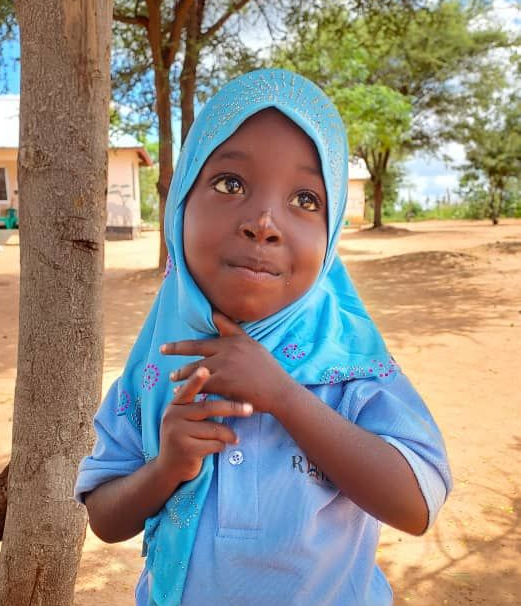
A child wearing a light blue hijab and shirt, smiling while touching their chin, standing outdoors in a sandy area.
By Amigos Internacionales March 28, 2026
Perpetua’s story in Tanzania reveals the daily reality of living with sickle cell and how compassionate medical care and faith bring hope to vulnerable children.
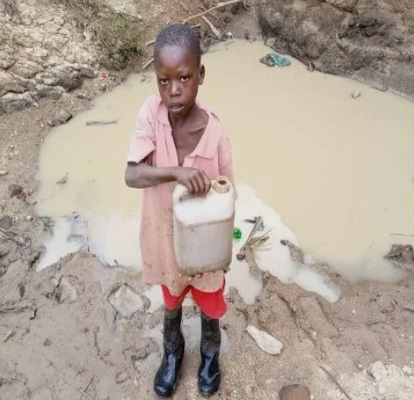
A person in a light shirt and dark boots holds a water container in front of a muddy, contaminated water source.
By Amigos Internacionales March 27, 2026
Learn about the water crisis in rural Uganda and how Amigos Internacionales is providing sustainable, clean water solutions to transform lives and communities.
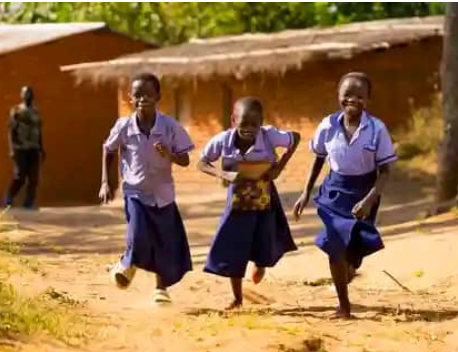
Three students in uniforms running along a dirt path in front of rural buildings.
By Amigos Internacionales March 26, 2026
Learn how child sponsorship in Africa transforms lives in Uganda through education, healthcare, and long-term community impact.
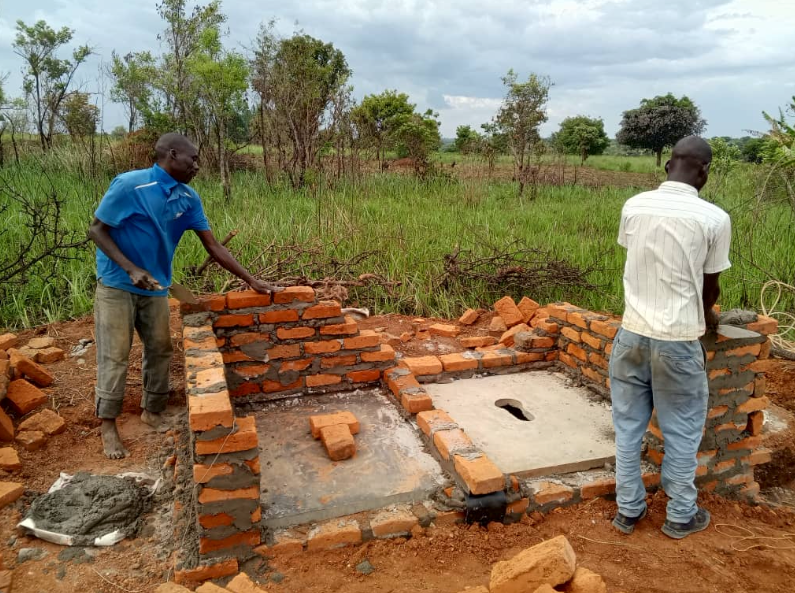
Two people laying bricks to construct an outdoor latrine in a grassy, rural area.
By Amigos Internacionales March 25, 2026
Support community efforts in Loyobo, Uganda, for a medical camp. Join us in fostering care, unity, & youth engagement.
By Amigos Internacionales March 24, 2026
Discover why children in rural Africa lack access to life-saving surgery and how Amigos Internacionales is providing hope through medical missions.
Three children walk along a red dirt path beside lush greenery, one carrying a yellow plastic container.
By Amigos Internacionales March 19, 2026
Learn the severe effects of not drilling water wells in East Africa. Act now to improve health, education, & economic stability.
A person crouches near a muddy, polluted water source in a wooded area, filling a yellow plastic container.
By Amigos Internacionales March 19, 2026
Understand the costs of clean water in rural Africa. Join us in making a difference for communities in need.
A large group of people gathers on a dirt clearing in front of a long, thatched-roof building under a bright blue sky.
By Amigos Internacionales March 16, 2026
Clean water transforms lives in Northern Uganda. Join us in supporting health, education, & economic growth. Get involved today!
Show More