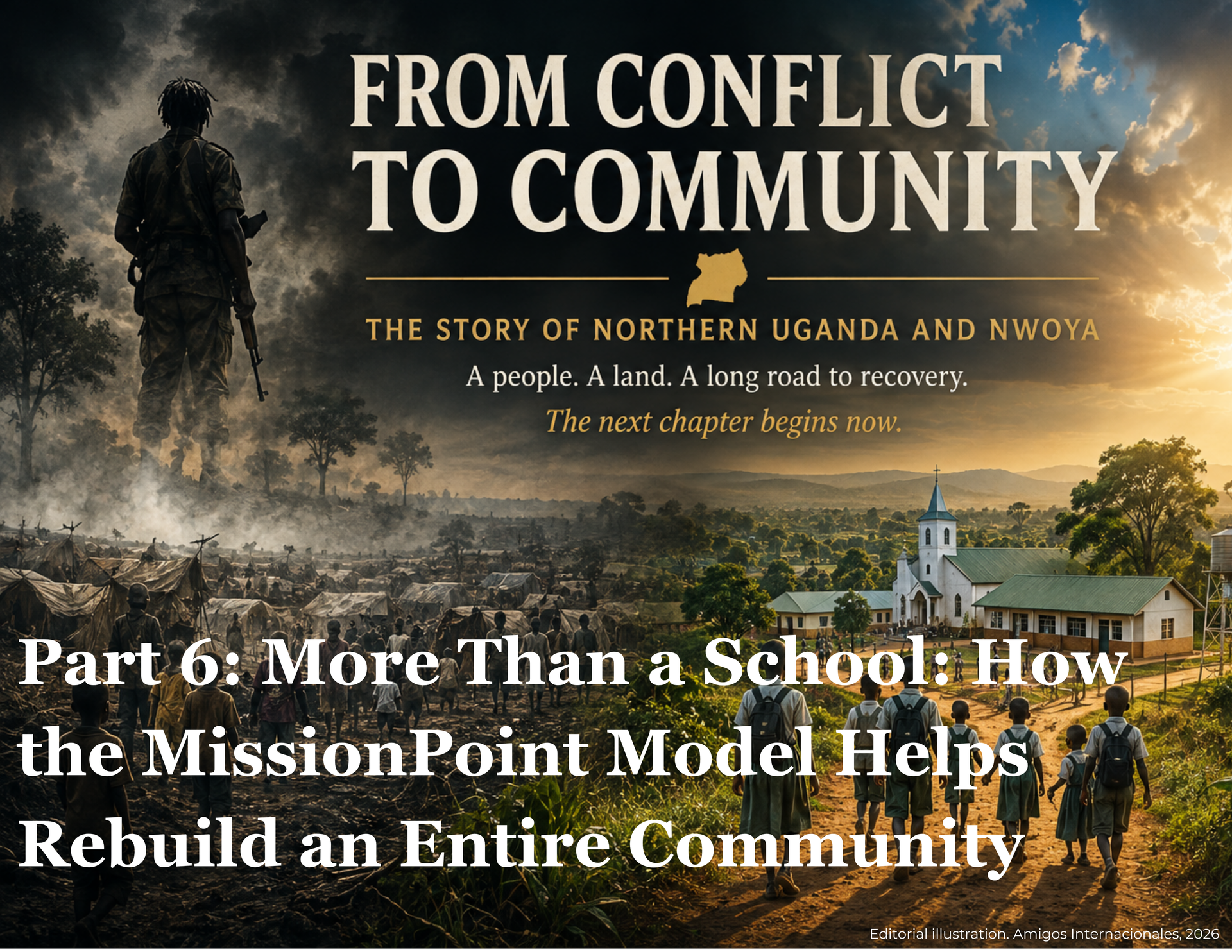
Part 6: More Than a School: How the MissionPoint Model Helps Rebuild an Entire Community
If Part 5 left you with one number, it was probably $12,500 — the working target to repair, equip, and stabilize Orua Community Nursery and Primary School. That number is real, and it matters. It's also, on its own, an incomplete picture of what Amigos Internacionales is actually trying to build in Korobar.
A school, by itself, can only do so much. Children who are sick miss class. Families without clean water spend hours a day on a chore that could be minutes. A community without local pastoral leadership eventually finds its momentum depends entirely on outsiders showing up, rather than on people who live there. Amigos calls its answer to that problem a MissionPoint — and it's worth explaining plainly what that actually means, rather than letting the word do vague, inspirational work on its own.
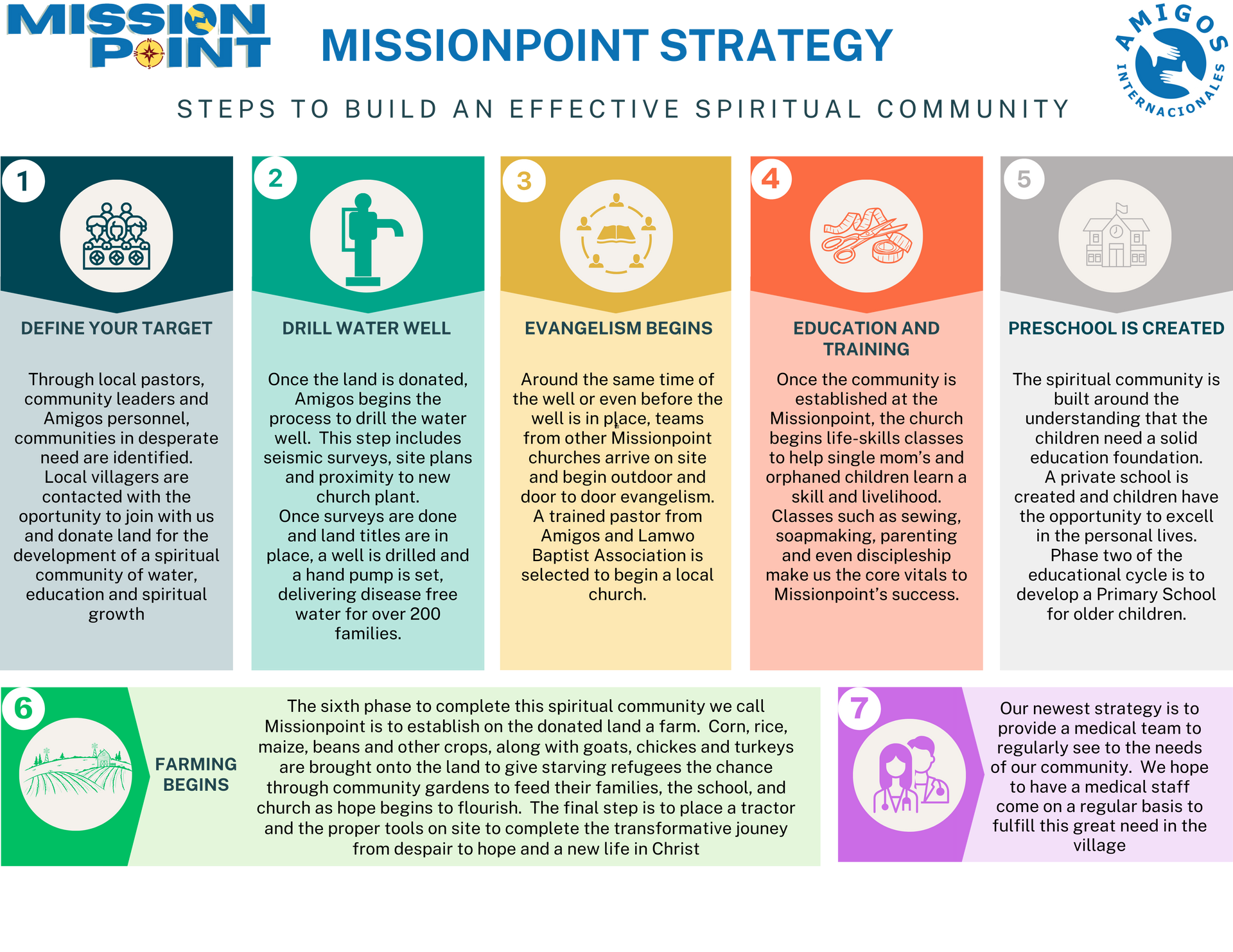
Seven pieces, not one
Amigos' MissionPoint model has seven components, developed and refined across the organization's work in Uganda, Tanzania, and beyond:
- Secure land and community commitment — not land Amigos buys and controls, but land the community itself offers, the way Korobar's 10.396 acres were donated rather than purchased.
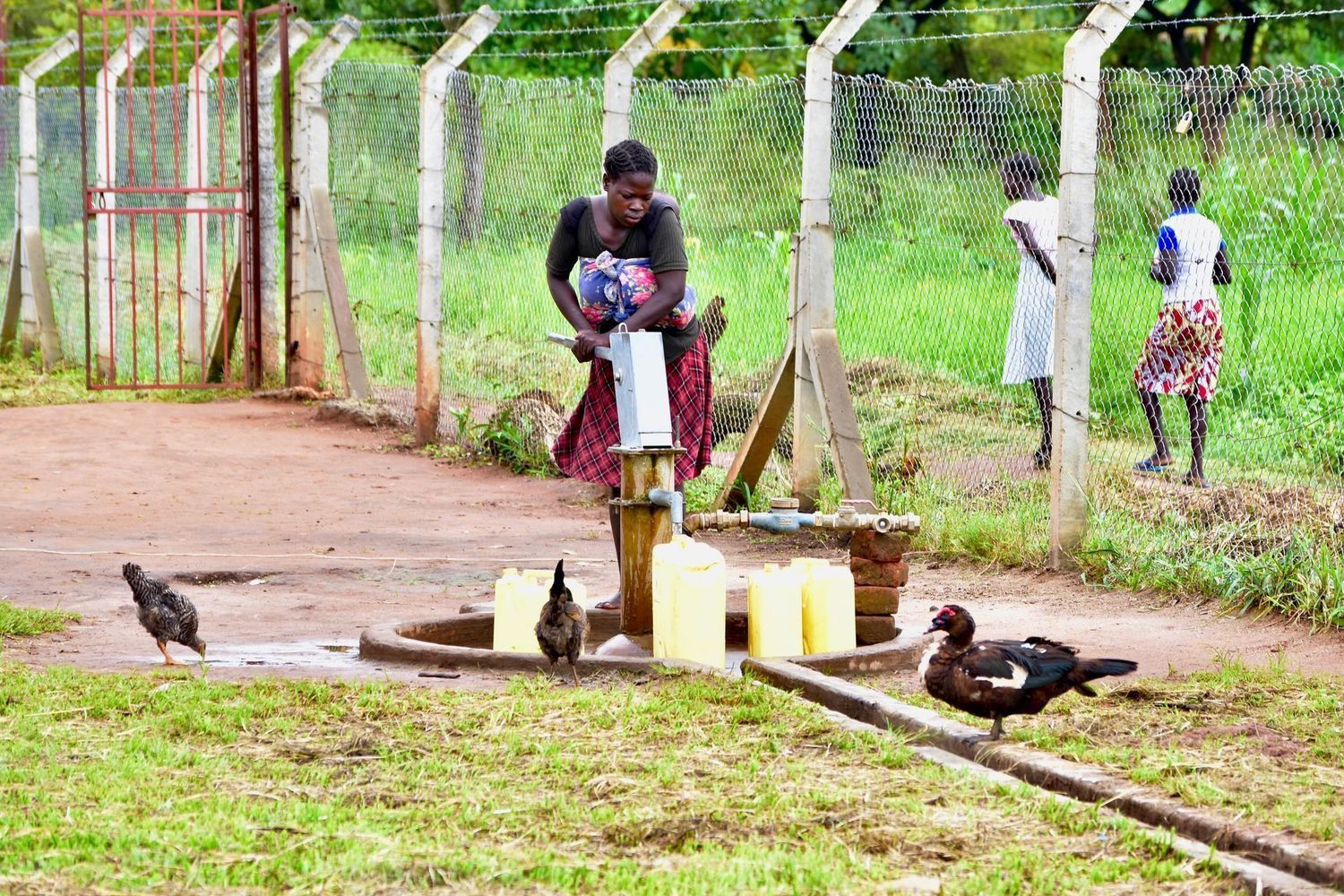
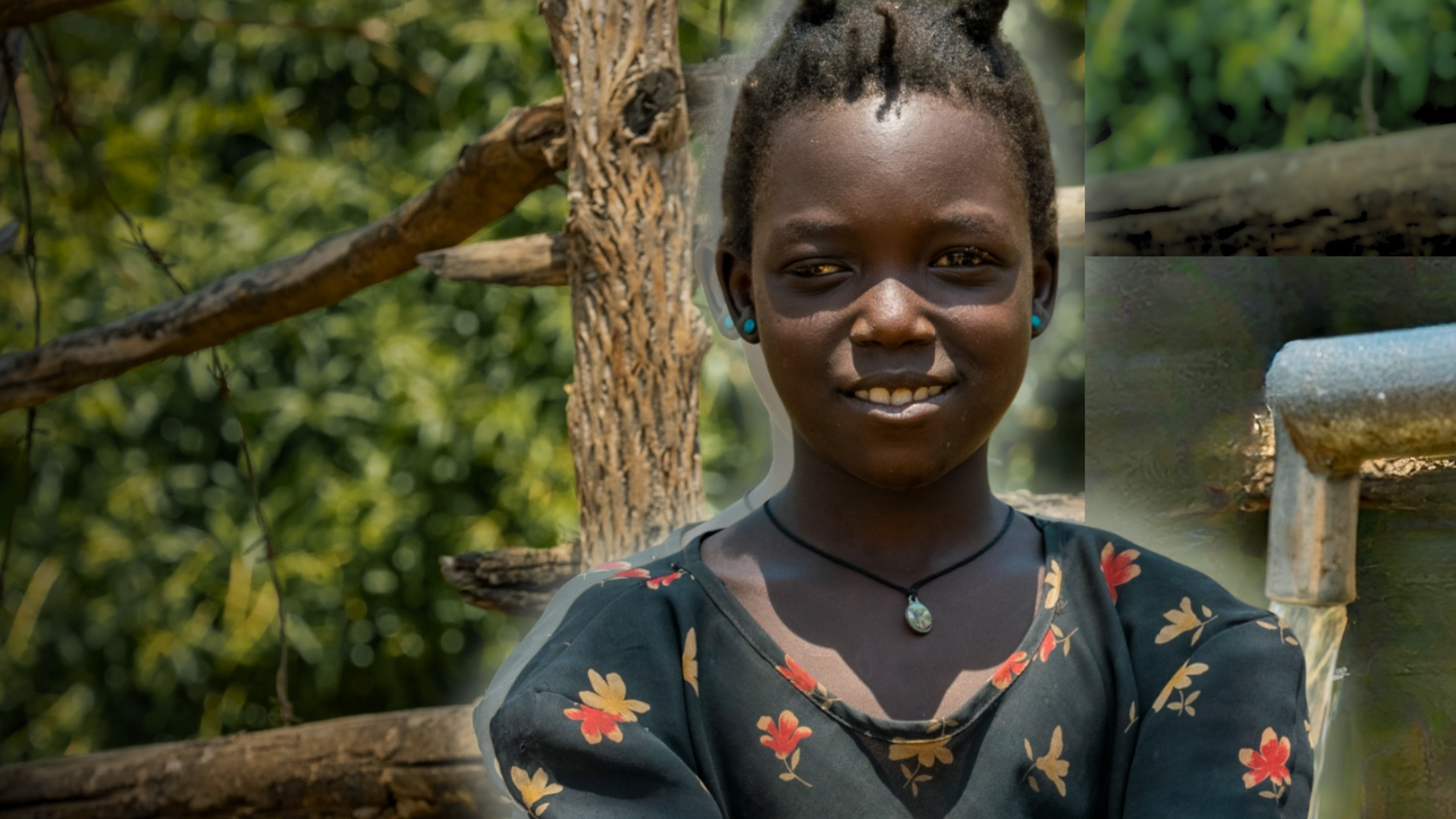
- Provide clean water — a functioning well or water source, because almost nothing else on this list works if people are spending their mornings walking for water instead.
- Establish the mission church — explained in detail below, because this is the component most likely to be misunderstood by an outside reader.
- Build the school or multipurpose facility — the piece Part 4 and Part 5 already told you about.
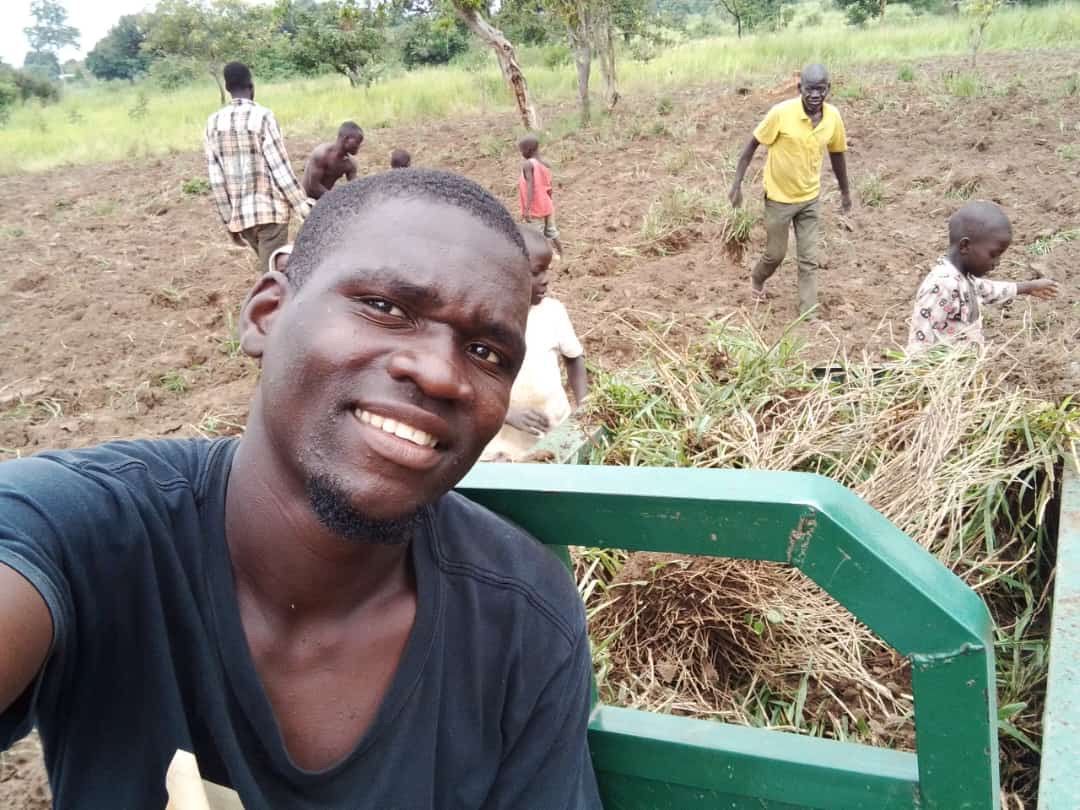
- Develop life-skills, livelihoods, and agriculture — training that turns short-term aid into a household's own ongoing income.
- Train pastors and local leaders — the step that determines whether the other six outlast Amigos' own involvement.
- Move toward locally led sustainability — the actual goal. Not a permanent Amigos presence, but its own end.
"A MissionPoint isn't a collection of separate donations to the same village. It's one system, built in a deliberate order, aimed at a specific finish line: a community that doesn't need Amigos anymore."
Why the church isn't decorative

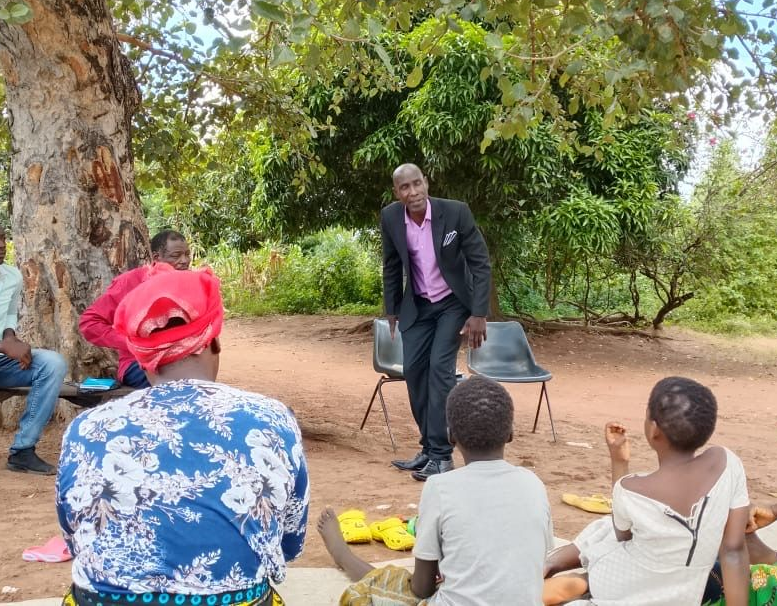
It would be easy for an outside reader — particularly one evaluating Amigos as a development organization rather than a ministry — to see "establish the mission church" on that list and assume it's a spiritual add-on layered onto the real, practical work. That's not how it functions inside the model, and it's worth being direct about why. In Amigos' own MissionPoint communities, the local church has consistently ended up doing something no school building or well can do on its own: providing continuous, trusted, resident leadership.
A pastor lives in the community permanently, in a way a visiting field team cannot. That resident leadership becomes the connective tissue between the other six components — the person families trust to explain why a feeding program exists, why a well needs community-led maintenance, why a school's preschool section matters as much as its upper grades. Amigos' own internal framing for this is direct: the model's core phrase is "I come to give you living water" — language that treats spiritual and practical need as one continuous concern, not two separate programs sharing a budget line.
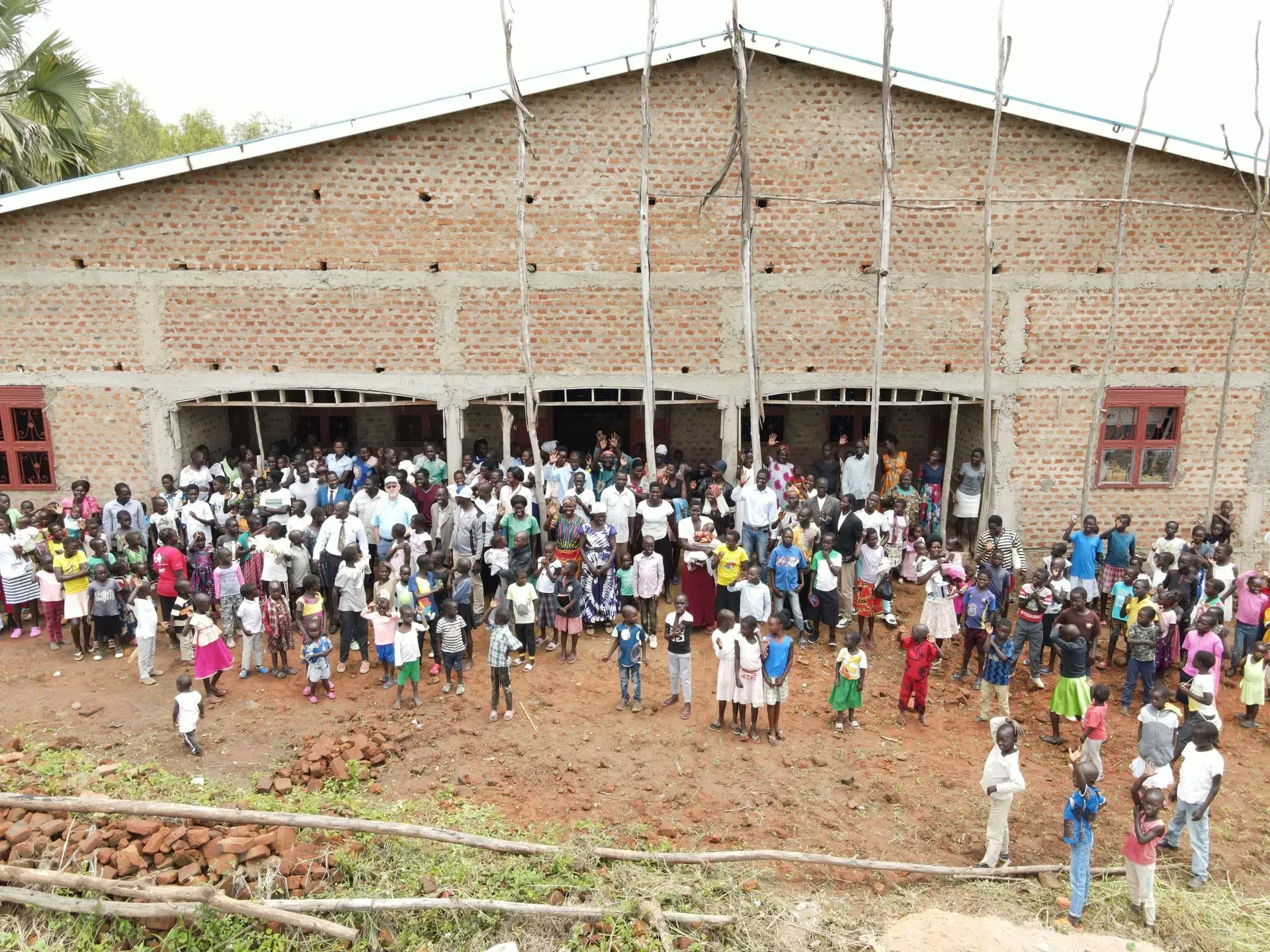
At Korobar specifically, this is playing out in real time: Agape Baptist Church – Korobar is an active, meeting congregation, though the status of a permanent building is still being confirmed — an honest, unresolved piece of the picture, not a finished success story.
What "integrated" actually buys you
There's a reasonable, skeptical question a careful donor might ask here: is this actually better than just funding a school, full stop? Or is "integrated development" more of a fundraising narrative than a proven strategy? The honest answer, grounded in the development literature rather than Amigos' own claims about itself: integrated, multi-sector approaches do show real, positive impact across a wide range of contexts, according to academic evaluations of similar programs. But the more specific claim — that combining sectors produces synergistic
"The honest case for this model isn't that it's mathematically proven to multiply itself. It's that a community with water, a school, a resident pastor, and a livelihood plan is simply better positioned than a community with only one of those things — and the evidence, while not airtight, points that direction."
effects, meaning the whole genuinely exceeds the sum of its parts — has thinner evidence behind it than advocates for integrated development sometimes suggest. A 2018 systematic review of impact evaluations found only a minority of rigorously designed studies actually measured and confirmed that kind of amplified effect, even though integration broadly correlated with positive outcomes.
That's a more careful claim than "1+1=3," and it's the one this article is actually making.
Korobar today: an honest scorecard
Here's where Korobar actually stands on each of the seven components, as of this article — not rounded up, not glossed over:
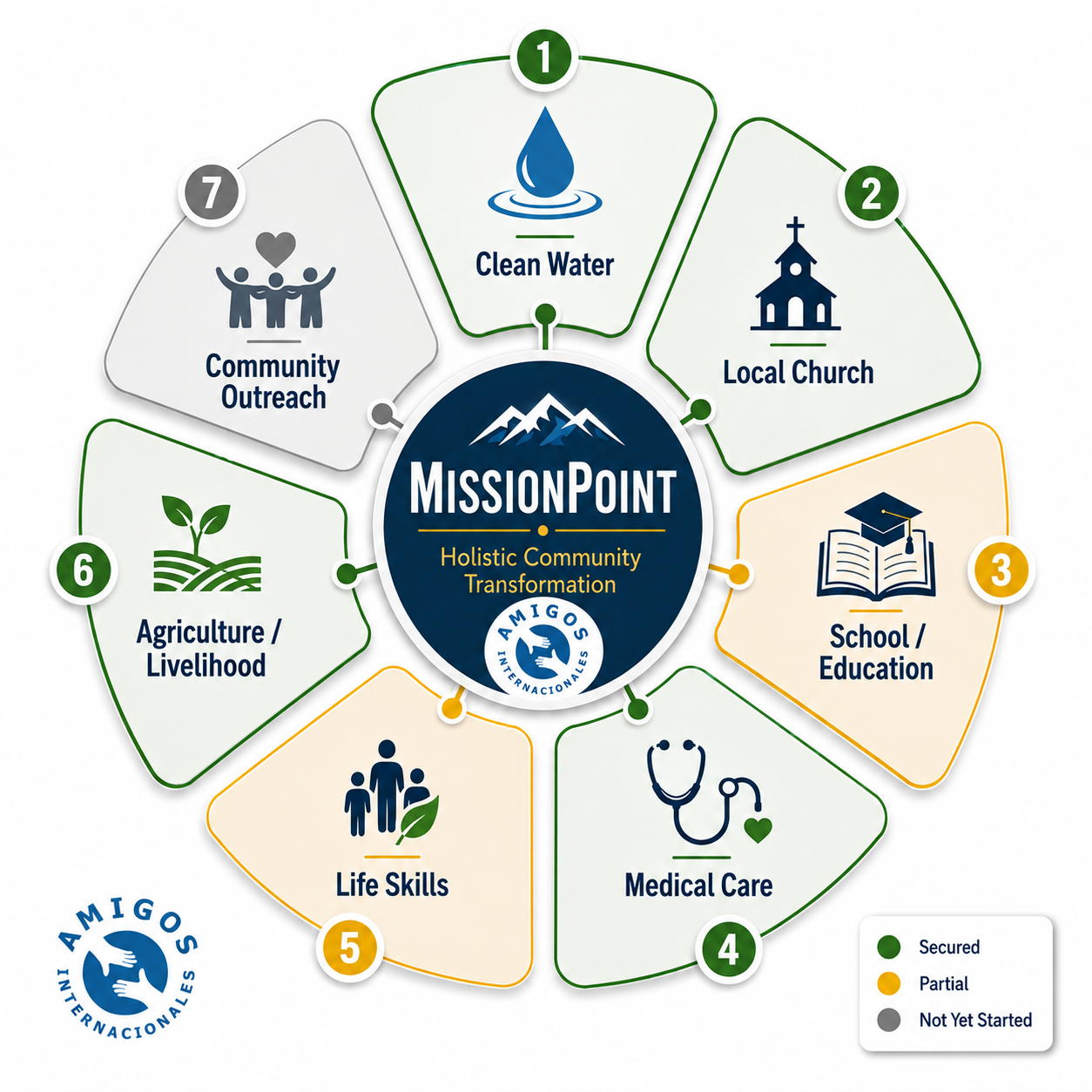
- Land: ✅ Secured. 10.396 acres, transferred July 9, 2026.
- Water: 🟡 Functional but inefficient. Not a blocking problem; a genuine future need.
- Church: 🟡 Active congregation, permanent building status unverified.
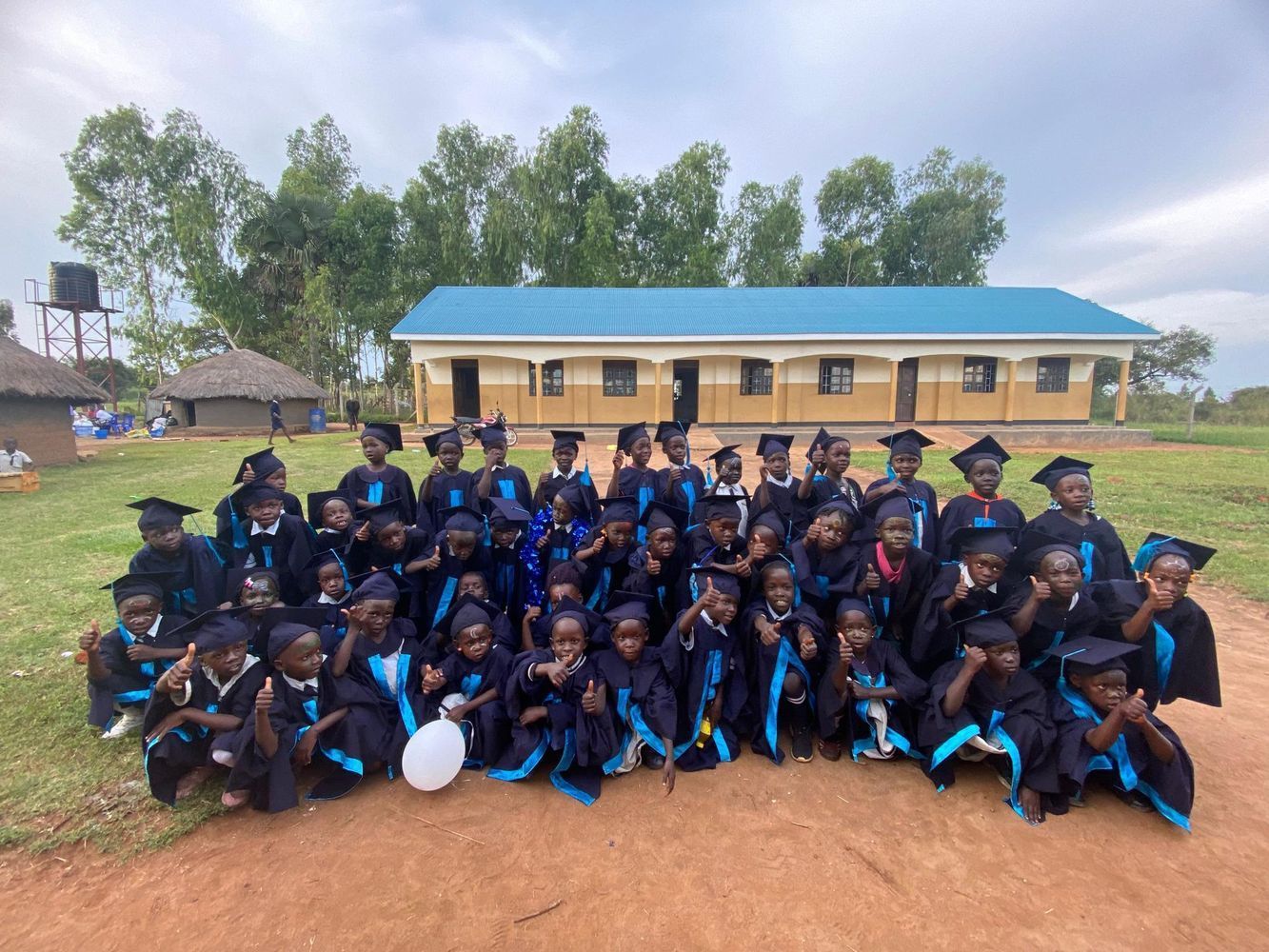
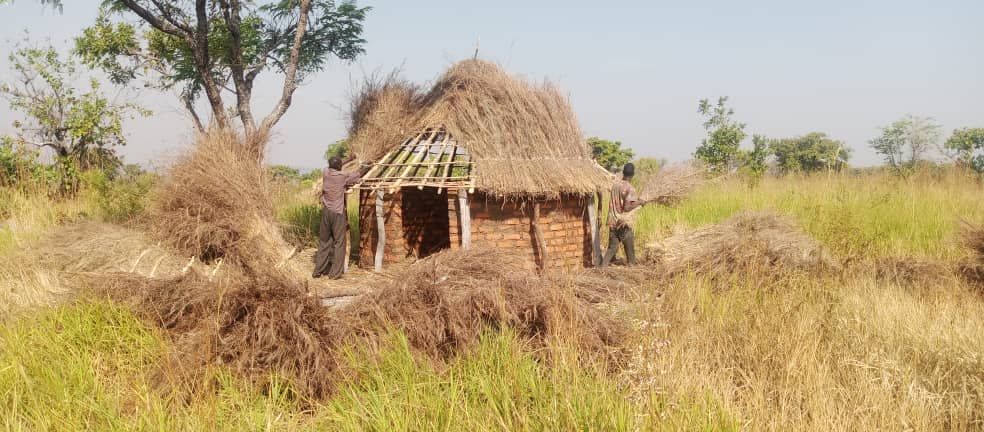
- School: ✅ In active restoration. Orua Community Nursery and Primary School, targeting a January 2027 full reopening.
- Life-skills, livelihoods, agriculture: ⚪ Not yet developed at Korobar specifically.
- Pastor and local leadership training: 🟢 Already meaningfully in place — a head teacher who stayed through the transition, and Pastor Okulu Santo as the established local Missionpoint leader.
- Sustainability: The long-term goal every other line item is building toward, not something achieved yet.
That's two components secured or well underway, two partially developed, one genuinely just beginning, and one — leadership — arguably Korobar's strongest asset from the start, since it existed before Amigos did.
What a fully built MissionPoint looks like
Korobar isn't Amigos' first attempt at this model.
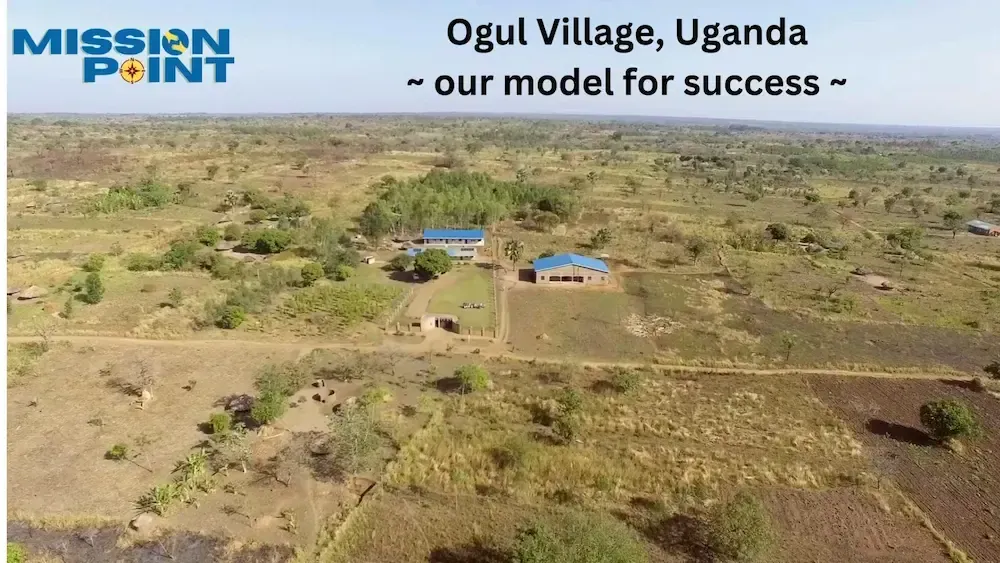
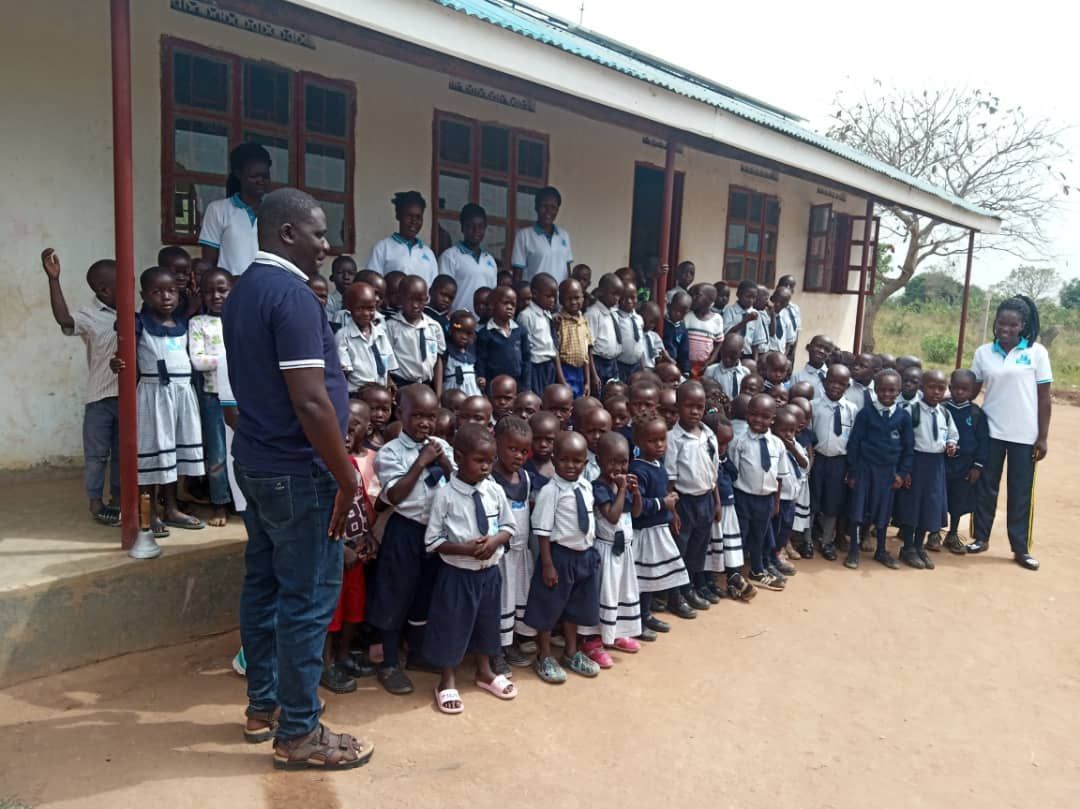
Ogul, in Uganda, is further along the same path — its school, Open Hands Academy, and its congregation, Agape Baptist Church – Ogul (a separate church from Korobar's, despite the similar name), represent what several of these seven components look like once more fully developed. Ogul isn't presented here as a finished, perfect success story — Amigos' own internal records describe it as active and partially funded, not complete — but it's real evidence that this model can mature past its early stage, not just a description of where it's headed in theory.
That's the honest frame for Korobar's current scorecard above: not a community waiting for Amigos to finish something, but a community and an organization partway through a process that has, elsewhere, actually gone the distance. Part 5 told you what one piece of this costs. This part has tried to explain why Amigos doesn't stop at that one piece — and why the model's actual finish line isn't a fully built campus, but a community that no longer needs the organization that helped build it.
FAQ SECTION
- What is a MissionPoint? A MissionPoint is Amigos Internacionales' integrated community development model, combining seven components: secured land, clean water, a local church, a school or multipurpose facility, life-skills and livelihood training, trained local pastors and leaders, and a path toward locally led sustainability.
- Why does the model include a church alongside practical infrastructure? The local church provides continuous, resident leadership that connects the other components — a pastor lives in the community permanently, in a way a visiting team cannot, and often becomes the trusted figure who explains and sustains the other work.
- Is Korobar a fully developed MissionPoint? No, and this series doesn't claim otherwise. As of this writing, Korobar's land is secured and its school is in active restoration; its water source is functional but inefficient, its church is an active congregation without a confirmed permanent building, and its livelihood and agriculture programs haven't yet begun.
- Does research support integrated development models like this one? Academic evaluations show integrated, multi-sector development approaches produce positive impacts across many contexts. Evidence for stronger claims — that combining sectors produces effects greater than the sum of their parts — is more limited; a 2018 systematic review found only a minority of rigorously designed studies confirmed that kind of synergistic effect.
- What does a fully developed MissionPoint look like? Ogul, one of Amigos' longer-running MissionPoint communities in Uganda, is further along the same model — including its own school (Open Hands Academy) and its own congregation (Agape Baptist Church – Ogul, a separate church from Korobar's Agape Baptist Church). Amigos describes Ogul as active and partially funded, not fully complete.
- How can I support the parts of Korobar MissionPoint beyond the school? Gifts to Korobar MissionPoint support the model as a whole, including the still-developing water, livelihoods, and church-building components — not only the school covered in Parts 4 and 5.
Part 7 of this series brings the whole story — the history, the school, the budget, the model — together into one direct invitation to help write Korobar's next chapter.
Categories
Social Media


Free Medical Camps in Burundi: What Happens When a Doctor Walks Into Gisuru | Amigos Internacionales